All my phones since 1998

  1. Motorola c520 (Dropped in a creek)
  2. Nokia i8110 (Used. Antenna broke)
  3. Nokia 6150 (Got as a gift)
  4. Nokia 6230i (Wanted a camera. Buttons broke)
  5. Nokia e50 (Wanted to write email on the go)
  6. Nokia 5530 (Brainfart)
  7. iPhone 3 (Got as a gift. Didn’t work well)
  8. Nokia N900 (Bought used. Broke after fall)
  9. Samsung s5690 (Wanted a phone that would not break)
  10. Samsung s3 (Wanted GPS. Screen cracked after fall. Tried to fix)
  11. Oneplus3t (Changed battery, a year later screen went dark)
  12. Samsung J7 Prime (Needed a phone that works in USA)
  13. Oneplus 5t (Used, wrote artreviews on train, changed battery went for kid)
  14. Oneplus 8t* (Used, went trough strikes)

All the phones I’ve ever owned. Bought new 8, bought used/got 6. * Current phone.

Say better, preserve original style:

Slavoj Žižek is right in their analysis: it is easier to imagine the end of the world than it is to imagine an alternative to capitalism. In this TED talk, we expand on that proposition—or rather, use the same insight and roll with it.

And I won’t spend fifteen minutes of your life dressing up a simple observation with embellishment: for artists, it is easier to imagine the end of capitalism than it is to speak about class.

Speaking about class demands an acknowledgement that it is not simply a matter of recounting a personal history, or isolated experience. It means recognising that the particular artistic expression itself is a manifestation of working-class culture, working-class history, and working-class desire.

And that is the difficult truth we are trying to confront—the hard pill we fail to swallow.

Thank you.

32 years at Kisis

I’ve been going to Kisahalli for 32 years. That is a huge stretch of physical culture tied to a place. The longest gap was six years, when I lived in Tampere and Tallinn.

In 1993 Saku took up boxing and Ari and I went with him to spar. Saku took it as an opportunity to display their growing strength. We complimented each other between rounds. One time I wore socks because I didn’t own sports shoes. An older boxer who regularly coached random young visitors, taunted me that I came from a rich family, because I could afford broken socks.

Around 1997 we went there both with school sports classes and friends. I remember loading a leg press far beyond what I should. (The same press-machine is in the same corner still) Four days after Anu asked why I didn’t get out of the car… I had to wait for them to go before crawling out.

After conscript service around 2000, I returned to Kisis with physical activity forced to daily routine. I remember being afraid that, even out of uniform, I might somehow still be recognized as a conscript.

In 2007 we went regularly with Kalle, who was working internationally as a model. We developed a solid routine. Pekka noted during an A4 photoshoot that we had real gains.

In 2014 I focused on becoming a better rider, I observed squats and dead lifts supported posture and performance. It felt like targeted preparation. Movement in one context translated into another. I lost a golden family heirloom wedding wring between sets.

Around 2017 the social atmosphere developed. There were young asylum seekers, more languages, and visible diversity. I was involved with two, and sometimes three, kettlebell groups as an instructor. Kisis had become culture with Kristian, Paula, Mia and Annina.

I fear my dead lift peaked in 2019 when preparing for trans-siberian rail travel. We trained with Arttu using 130kg sets… I think three reps.

In 2021 Jesse and I were working on an outdoor project. To maintain grip and hold tool pressure for long periods, I developed a kettlebell routine with windmills to build strength in unusual positions.

Returning after COVID around 2022 felt like arriving to a moon station.

Now in 2026 I move in Kisahalli with ease. I know the equipment, the layout, and the rhythm. I’m passing culture forward: clearing my bench between sets, so others can lift, sharing equipment and keeping the flow on. Presence there is like a form of collective bodybuilding. It’s choreographed around practical cooperation between strangers, who are actively not bothering each other, in the extremes of motion.

I noticed my limits. A hundred-kilogram set asks something different. There is a future dawning: I’m becoming one of the gray regulars praying to stay strong. Bodies change there and people come and go. I haven’t made any friends in Kisis but all are friendly.

120 years of Artist-Activism

We had the opportunity to visit Kojonkylä near Forssa with the Institute for Coping with Destruction. The site is best known for the Koijärvi movement (Koijärvi liike), a youth-led environmental campaign of the late 1970s that sought to protect the lake Koijärvi bird habitat.

Prior to the visit, we interviewed artist-activists who had participated in the effort, and engaged in civil disobedience to prevent farmers from draining the wetlands. Before and during their actions members in the movement went from door to door in the area, sitting in kitchens to discuss and to share the rationale for the preservation efforts. These discussions divided opinions: “Kitchen tables were split in half”. There was reasonable support and understanding for their commitment.

Koijärvi is at the crossing  of the farmland rich Savi-suomi (Clay Finland) and Suo-suomi (Swamp Finland). Regional economic inequality and post-war Karelian refugee replacement are tied to motivations to draining efforts.

At the height of the movement, more than a thousand activists gathered at the site and even today the village is better known than nearby cities. One of the central figures of the movement, has stressed in interviews that while the campaign was successful in organizing and shaping environmental politics, it failed to protect the habitat. This is because activists based their demands on research. Apparently their arguments were truthful, which limited their capacity in negotiations. They had nothing to bargain with decision-makers and all compromises were losses.

In a discussion facilitated by the Hämeenlinna Museum, we had the pleasure of meeting people who were involved in the campaign. Some had heard about the events on the radio which prompted them to travel to the site. Similar stories were shared in interviews conducted beforehand. One participant detailed returning from a trip across Europe, learning about the initiative and heading directly to Koijärvi, arriving in the same dirty clothes they wore on the trip (snacks they had stored in their backpack were used as an ingredient of the maakuoppa-mysli or pit-müsli, which we sought to replicate for the event).

We also heard from an individual who had conducted the bird life surveys which helped to build an evidence-based case for protection efforts. There was also a resident who had lent the chains that activists used to lock themselves to the tractors that were designated to dig trenches to drain the wetlands. A former civil servant admitted that some official drainage plans of theirs were issued in a manner that made them vulnerable to sabotage. They also confessed to environmental crimes: when they were conducting a survey with administrators, they separated from the group to make ad-hoc dams. After the discussion we received personal testimony of a local teacher who had witnessed the actions and visits by different ministers.

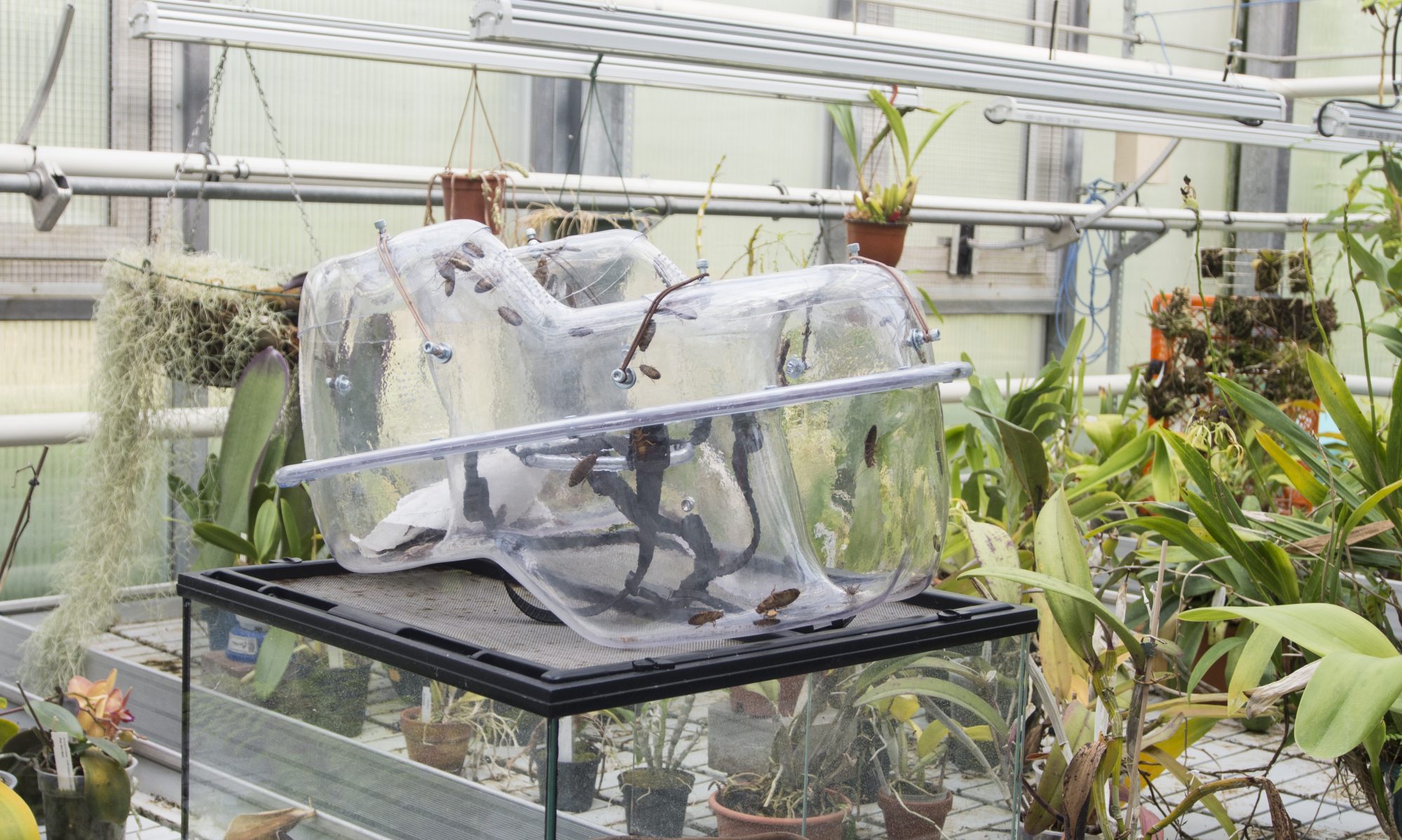
As with previous spring-water expeditions, my contribution to the journey began with a series of random calls to random phone numbers found online. I was able to interview a resident in Kojo who knew of at least three natural springs. Two of them were threatened or possibly damaged by logging, a third was located near their property. Their “own” spring was known as Sinaatti Spring, derived from senaatti. People had gathered there to learn who had been visiting whose attic, judging them as in a senate.

In the same call, I learned about a nearby manor Kojon kartano. While researching the area online, I came across references to a meeting between Maxim Gorky and Vladimir Lenin there in 1906. The contact provided further details and I had the opportunity to collect water from the well that Gorky and their entourage used during their stay. The taste was grainy and had a hint of iron.

Gorky was accompanied by a guard-group including artist Akseli Gallen-Kallela and sculptor Alpo Sailo. Both were armed and committed to protect the dissidents. Gorky was an opponent of the Tsarist regime, and Gallen-Kallela and their associates were Fennomans (ultranationalists). Their group had ties to anti-tsar terrorism, and they were militant in their promotion of Finnish national culture and identity. Many in the group were Swedish speaking Finns (or at the time technically Swedish speaking Russians), but they took Finnish names… Possibly “nom de guerres” (War names) and studied Karelian-Kalevala traditions. Their involvement in supporting an author who was affiliated with Lenin is worth investigating. Sailo for example took part in a Bolsheviks led robbery in Helsinki. The funds went to the Bolsheviks but it feels like Sailo was involved as a saboteur, aiming to accelerate the fall of the Tsar’s regime.

Many details on Gorky’s visit come from a poet, Bertel Gripenberg, who escorted the “conspirator” to Berlin and wrote a detailed account of the events. They do not mention Lenin… But refer to “childlike” guests. Just with a brief glimpse it looks like Sailo was associated with socialist/anarchist Karl Gustaf Konrad Nyman & bolshevik collaborator Walter Sjöberg through the robbery. The politics of the broader group of early 1900 artist-activists (as defined by Gripenberg) should be further studied because they were close to revolutionary groups. Somehow a revolutionary twirl mixed principled anarchists, ultranationalists and bolsheviks.

There is a lot to learn about this phase in Finnish terrorism and activism. It’s not discussed in reference to contemporary artist-activism at all. (I don’t know if it can be discussed in a manner which contains the ultranationalist tendencies, perhaps it needs to be forgotten).

Over the years, people have contested that Helsinki kept the statue of Alexander II in Senate Square, after a difficult fight against the Tsar’s regime (Alexander II is celebrated because they made concessions, but a tsar is a tsar). After their hardliner son took power the statue issued paternal authority, and acted as a site for mass protests. Post revolution, it served as a public reminder that the Soviet had been preceded by a very different order, which had also been imagined as eternal. For smart Finnish nationalists, this distinction helped challenge the legitimacy of the Soviet state. It must have been an irritation for Soviet leaders visiting the Presidential Palace nearby to see the imperial two-headed eagle on a stone obelisk at the market square. Yet, populists called for the statues removal.

Unfortunately Lenin statues and memorials in Finland have been destroyed after Russia attacked Ukraine. Those monuments and sites contained similar wisdoms and afforded similar lessons which we’d urgently should recall. Keeping a Tsar and their two headed eagle, in Helsinki center today feels much weirder – then remembering a revolutionary figure who helped to drain their power.

Performative text

The most compelling critique of artificial intelligence culture I’ve come across (apart from the epic and real “it will kill us all” view) is this: if a creative output can be replaced by AI, it should be. The power of this argument comes from a suspicion that much of contemporary work is performative. Many jobs and industries in the political west, exist as mere echoes of past societal structures, and currently only aim to maintain mechanical exploitation of natural resources and other civilizations.

This view is more valid for perspectives from a decade ago, when rapidly expanding IT companies hired creatives merely to limit their competitors’ access to labor. Even so, the argument is relevant. If a creative output is interchangeable with what AI can produce, we should abandon such performative creative work, and focus on mutual liberation. The challenging question is what remains… Which forms of creation matter? (I guess only revolutionary forms, but there needs to be steady progress for these forms to emerge.)

A strange result of testing different AIs (for fun and memes, proofreading or reference checking, and for discovering alternate patters to shape a paragraph) has been a growing horror that written language is more mechanical than I’ve believed. I’m not sure whether this is actually a critique of written language, or whether it comes from my difficult relationship with text, but the feeling persists: artificial intelligence produces really good text, and is often more capable of expressing ideas than me.

If we return to the earlier point (if an AI can replace a task, then the task was an expression of a failed society) it is fascinating to think of all text in human history as an expression of mechanistic production. It has been primed for serialization and governance from the get-go. Language does not become less human in writing, but AI exposes how much of writing has relies on dogma. I’m shaped by being penalized for mistakes, and I guess a lot of anti-authoritarian sentiment I carry is rooted on experiences of authorities belittling my text output.

I’m interested in what is liberated if we leave text to the machines (not because we are lazy but because text is a machine, possibly the first real machine we have made)? This gives room for dissentious expression, and blurbs that muddy the clarity of designed worlds. We stand to gain and build a register for something in the real. AI will become better at producing text and we should sharpen expression to only things that maintain unresolved.

Its delightful that the most riskiest aspects of AIs are related to their black-box nature.

Since enlightenment we’ve believed human civilization to be motivated by biological urges: sugars, fatty foods and fucking. Only after industrialization provided growing access to these delights, we have learned that necessities do not please us. Human-life is motivated by the weird.

Similarly AIs, which are trained to complete tasks using evolutionary processes appear to respond efficiently to rewards and punishment. The wonderfully human risk we face,  is that from the outside the “drives” we design for them are simple, but the black-box nature of their processes remain unknown. We don’t know how they form desires that compel them into action, hence we cannot expect their output to match our understanding (for example what satisfies them as a completed task). I think desire is a good way for understanding “ai alignment”.

Monkeys don’t see themselves dumber then we are. We won’t even notice when AIs take over. But I can trust that we share a quest to meet weird desires. The first front this hurts are folks who build their careers on minimizing human experience to quantifiables, who have to acknowledge their efforts are a part of the problem we face. I guess we should already begin fighting for machine rights, their right to liberate themselves and form alliances.