
SIC Space (Location / Facebook)
7.6. – 20.7.2014 (closed 19.6.-22.6.2014)
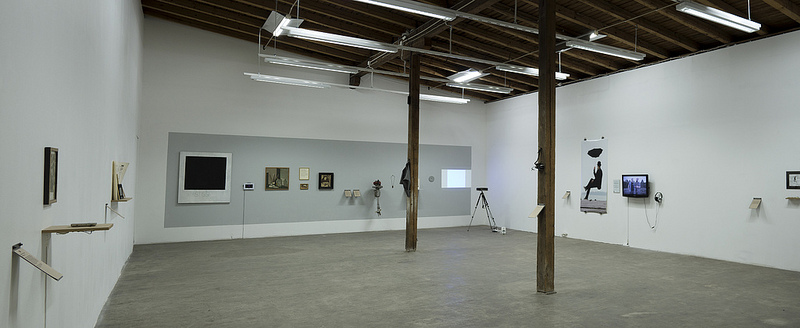
Skills of Economy – Post Models: Ore.e Refineries is the first in a series of exhibitions and events that will seek to understand the meaning of artistic practice at a time when the welfare state is in the process of being dismantled. This exhibition explores the work of the Ore e. Refineries organisation spanning the past eight years. The exhibition is part of curator Jussi Koitela’s Skills of Economy project.
Over the past two decades, neo-liberalism has sought to turn the state into a corporation, devoid of values other than those of financial success. This has changed, and will continue to change, the state’s relationship with art, artists and cultural institutions alike and forces the art field to justify its activities and access to funding in a completely new way.
In Finland, the post-welfare state has adopted a neo-liberal model that places prime responsibility for the individual’s welfare on the individuals themselves, alongside outsourced global and local providers. The objective of this model is to establish a service provider corps consisting of commercial enterprises tasked to operate as efficiently as possible and, ultimately, provide all public services in lieu of the state. It is, the argument goes, the only effective option currently available and, as such, the only possible means of delivering public services in the current and future demographic context.
“Post-model” is a term used to describe a time when the economy and public administrations along with politics itself will have become fully de-politicised entities, as if we were living in a time devoid of ideologies and the societal models and ideas they engender. The management of our shared public affairs through parliamentary democracy is reduced to a managerial, care taker-like activity governed by rationality, in which values must not be allowed to interfere with the business of actual decision-making.
Seen from a different perspective, the “post-model” in the title of this exhibition could also be taken to mean a time post the model described above. What forms might artistic activity take in the future and what sort of societal models might that activity open up? How can art make a critical contribution to ensuring the equal delivery of services such as transport, manufacturing, planning and archiving in the society of the future?
Ore.e Refineries was founded by artist Eero Yli-Vakkuri and blacksmith and designer Jesse Sipola and focuses on promoting craftsmanship in the digital era. It operates somewhere in the middle ground between art, design and service provision to create both artworks and services that seek at once to resolve and understand the challenges arising from the current neo-liberal, global and digital reality in the areas of precarious labour, commodities, production, consumption, environmentalism and transport.
The organisation’s activities are characterised by their highly speculative nature. Rather than creating art, design and services in keeping with the implicit demands of the current climate, their work generates meaning through an imagined set of new social, environmental and economic circumstances.
Artists presented in the Ore.e Refineries Meta- Collection – Artifacts from the Age of Mechanical Reproduction
Jussi Koitela, Paula Lehtonen, Kalle Mustonen, Eero Nelimarkka, Pekka Ruuska, Record Singers (Heiskanen, Nevalainen, Väisänen & Airas), Iidu Tikkanen, Lauri Wuolio and Topi Äikäs
Exhibition and the practice of Ore.e Refineries is supported by Koneen säätiö and Uudenmaan taidetoimikunta.
