20170402

The US army has updated their​ dancing choreographies.

The internet was embraced by avant-garde artists seeking alternatives to capitalism and hierarchical institutions. They searched for new ways to facilitate transformative collaborations and attempted to establish horizontal organizations. Early net-art made the fetisation of art objects difficult, hence threatening the rationality of old art-institutions and art markets.

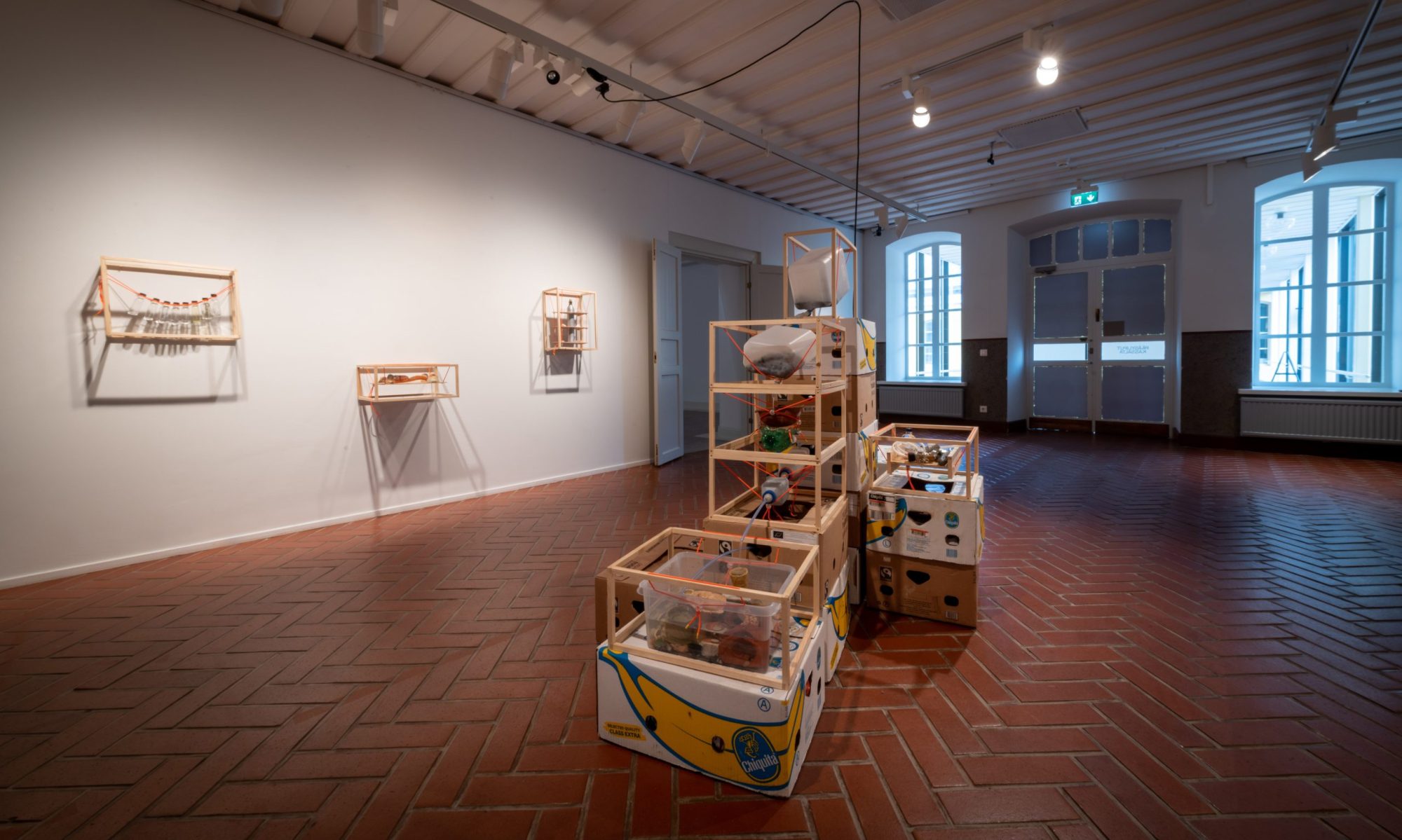
After the launch of facebook (2004), youtube (2005) and the chrome browser (2008), the internet was commercialized and netizens converted into data-cattle. Radical organizations were quantized, free technologies for collaboration forked into commercial products and netizens made into users by forcing them to comply with technical standards controlled by big-business. Avant-garde artists attempted to tackle such developments by emphasizing the tangible, the event and by developing unique homebrew technologies. Between 2000-2010 the best art was made with cheap materials (cardboard, breadboards and tape) and it didn’t work.

Avant-garde art was unstable and it lacked style, which made it impossible to appropriate. Electronics were taped on gallery walls, things were called site-specific but it only meant that they couldn’t be bought and moved. Software developers didn’t even know how their interactive installations worked, so they couldn’t be bribed. Instead of the art reaching out to the audiences – Audiences had to go out and look for to the art. The focus was on the social gathering, which often took the form of a festival or a party. In this setting artworks served as a party-decorations. This movement strengthened grassroot organizations.

Artist maturing in the post-internet age aligned with the dream of building self-organizing organizations. They want to have the same freedom. They acknowledged that the movement of the audiences could be made more efficient through marketing, by embracing the commercialization of the internet. Through surrender they could emerge liberated. As a side quest they learned​ stylistical skills which made them better marketeers then past institutions. They learned to convey honesty in market driven environments and their parties got big.

A big part of the marketing strategy was the re-fetisation of the art object. Instead of making objects from cardboard which would break after use, art was made from stylish but still cheap portable materials (plexiglass, color prints, fabrics). These were more inviting and served as evidence of the artist’s commitment (real diamonds would reveal their class, so fake diamonds are used). Artworks made for gilded usb-sticks worked like passports which could be used to swap parties on the fly. By using unified styles, techniques and materials artist across the globe could alling behind the same movement.

Beer was free (as it was bought from tax-havens) and the music only mildly disturbing. Audiences had to be there because they were afraid they’d miss the moment when things would suddenly start to make sense. The party became a global institution and it’s visual cues were formalized. People started wearing caps and old institutions lost their audiences. Their marketing strategies failed to touch people and they lost their significance. The party stole their sponsors.

This is why Ars17 looks cheap. The artists features in the exhibition are stronger than the old institution. The exhibition shows that artist are winning the battle for personal emancipation and old institutions have failed to grasp the movement.

But we are left stranded (The av-gear rental companies the only real winners). In the institutional setting, stylish but cheap materials came of as true-cheap (as in stagnating poor) and clever-low-cost-solutions look like trickery (as in faux-grunge). You can’t keep your cake and eat it.

Want more Guggenheim’s for Helsinki? Vote the Green party. Wall of shame.

20170330

“‘Prism House Complete Percussion Vol. I‘ is a compilation of 320 found sound samples gathered from field recordings made exclusively in New York City”. It works well (The music the band makes is sentimental). Sounds of the Junk Yard (1964) Michael Siegel is a better reference for sound of work! My favorite is  “Alligator Shear” (201). Siegel’s Sounds of the Office is a classic (Perhaps it inspired the PO-24?).

I’m not sure if SOW: Blacksmith ed1 is offering anything new to the continuum of groove oriented musique concrete. I guess the publications openness (direct availability through archive.org / freesound) is it’s best merit. But there are so many great free sample packs already out there that it’s impossible to stand out. I’ve been bragging that SOW is a True-Marxist sound publication: It is NOT a representation of labor or a glorification of the labor force – It is a tool (Which can be used to to make techno). The grooves of the machines can be yielded to move our semi-unemployed bodies struggling through post-industrial landscapes.

The idea that techno is the music of the working class was announced by Jori Hulkkonen in 2011. I got to interview him during Kotimaan teknokatsaus vol 3 (16:41). Similar views are present in Jeremy Deller’s Acid Brass project. In 2011 Hulkkonen described techno as a “Human soul with the frame of the machine”. He talked about Detroit and how the cities empty industrial spaces were appropriate for social gatherings. Abandoned factories filled with bodies moving to the rhythm of machine made music. He believed that Kemi’s development as a city forged him into the artist he is today. After factories were closed and parents were unemployed, their children occupied the factory facilities, filled them with mechanical sounds and developed new cultural expressions (and industries). Techno served as a gateway for learning how to work with computers, to organize gatherings and to work creatively. It was born from necessity.

The response for SOW has been ok. People have celebrated the release on Reddit. Apparently “Industrial sounds are so hot right now” and the Novation Circuit tailored .syx has is well received (52 likes). Also got in touch with Petri Kuljuntausta who invited me to host an exhibition at Akusmata sound art gallery in the summer. I’m moving steadily into towards sound arts. The transition of migrating from performance art to post-marxist sound art has taken two years and a little under 800€ in gear investment. I regret that we didn’t explore the sonic possibilities of Jesses forge in more detail. The sounds are pretty straightforward. I guess I should apply funding for ed.2? I could ask Hulkkonen etc. to produce songs from the sounds too.

Interesting audio slicer, loopers and scratch emulators as VST: kammerl.de/audio/Beat-Repeat Effect is also available for
Mutable Instrument’s Clouds.

Visited Ars17 at Kiasma. Not as scary as I thought. Simple stuff. It felt homemade and I was only scared by Ilja Karilampi.

20170329

Today is the day! All of the files are available at http://oree.storijapan.net/praxis/sound-of-work/. The complete 1gb .zip file can be downloaded from https://archive.org/details/sow-blacksmith-ed1. Made a video announcing a selection of sound for the Novation Circuit .syx. I got confirmation that the files are ok in freesound (still some tweaking to do). Published a demo on soundcloud. I can now begin to wear the Atlas Copco cap I got from the company as a sponsorship as a token of a successful publication.

20170327

IKEA GLOCK 9mm (2012). A photo of an assembled unit.

Writing an abstract for the Hollo Institute spring seminar, emailing with Kristina Junttila concerning an upcoming trip to Tromsø (a horse performance is in the making!), stressing over the Kontula Electronic gig and making neurotic/pointless edits to the SOW: Blacksmith ed.1 sound pack text descriptions/webpage (while waiting for Frederic to confirm that the clips have been accepted to freesound.org).

Discussing the politics of art education: Pedagogical Paradigms: Documenta’s Reinvention (2010) by Denise Frimer.

Continue reading “20170327”

20170325

Visited Mikko Kuorinki’s “LEG SLEEPS DROP DEEP” exhibition at SIC last night with Topi. The presentation felt unfinished. Haven’t read the catalog texts yet. Olli Keränen presented works in the SIC main hall. His pieces felt hastily made. Their artworks appeared similar. Both artists evade simple solutions but as they presented​ works in the same space the combination felt like trickery. Their artworks require simple and pretty art around them – They exist in contrast. At the SIC event they couldn’t find their momentum. Had a pleasant chat with Josefiina Nelimarkka.

Visited Leena Kela’s Alphabet’s  of Performance Art at Mad-house. The piece was presented as a part of the Hurraa children’s culture festival. It has a perfect. Kids age 3-10 were taken by the performance. Kela presented a critical analysis of the history of performance art and studied how its aesthetics have been standardised. Kids were laughing and commenting the show. The event proofed that conceptual art works for kids. I was reminded warmly with my ÄLÄ OLE LAPSELLINEN article from 2013.

Nice video on BASTL instruments by Cuckoo.