20210512

Had the pleasure to participate in Forest Dreams – A critical conversation around the work of artist Agnes Denes -event at Melbourne Design Week. The talk was initiated by Jock Gilbert and Sarah Hicks whose approaches to land art and land conservation, I learned trough their 2015 article Forest for Australia: Challenging Loyalties. Our talk was fast but I appreciated the event. I prepared a pre-recoded intro to my bit on the topic. Hoping to continue exploring ruins-as-beauty.

Helped in streaming/managing the Frame Knowing with(in) Limits -event. Had the pleasure to be introduced to Jenni-Juulia Wallinheimo-Heimonen and her praxis.

Performed in the How To Do Things With Per­for­mance Grande Fi­nale. Got on stage right after Jamie MacDonald, so I inadvertently visited my first stand-up gig. MacDonald was great, well planned and smart. It was embarrassing to perform after him. I had planned a co-authoring performance in which the audience and I would have written an artistic review of the event for Mustekala (the performance was titled “This is the Great Review We Write for Mustekala”). But being inspired by Tan Lin earlier that week, I started off with a vote were I presented two options: The first option was framed as being a potentially stressful bit, which would have lead us towards a burnout (writing an article in an hour). The other option was described as ambient, boring and inverted (Titled “OISAC”, with an inhale). The audience voted for the latter so I ended up reading the Casio watch module qw2271 manual and followed the different choreographies it suggested for operating the compass, barometer and altimeter settings. Both options mirror some kind of post-covid-post-burnout mode of creativity but OISAC worked better in sparing joy in exhaustion.

Prepared two wooden benches for an installation which will be shown in the Helsinki Biennale. It was nice to visit Vallisaari. There were a lot of interesting folk at the local lunch bar. Heard a few murmurs about the miniature ecological catastrophe the biennale brings to the island.

Sourced a spare part for my Kaosspad 3 and managed to replace the broken fader. The fader reads b5kx2 and the part number is 510374524026 (Effects Level Fader). There is a service manual online too. Easy fix, not a lot of components to worry about. I could go for touchpad led mods with the unit. The other pots feel worn too. Not using it much for anything.

20210504

I’m into manuals right now. It’s a new thing for me. I’m reading long technical manuals which guide how to use a tool or technology. I recently bought a Casio ProTrek PRG-40 watch from the year 2000. I bought it for cheep, a corner of the watch face has chipped of but it works. It’s a survivalist watch with a compass and an altimeter. Exactly something I wanted in my teens – It’s currently affordable and looks like a grotesque sculpture. The manual for the watch module qw2271 is incomprehensible. Being stressed by work I’ve spend my nights studying it.

I imagine reading a manual is like reading a bible. There are meta-narratives (altimeter operation guide is a promise of future adventures), key combos which I have to recite to remember and the entire manual opus, echoes a deterministic world-view: Read this and you will learn it, then you will know it – There is an order to life, sleep easy. This particular watch is so complicated to use that operating it makes me feel like an indoctrinated member of a clergy. I’m of the manual readers -clan.

Bibliographic Sound Track by Tan Lin speaks to me trough the manual and data management aesthetics. I relax when stuff is listed and written not to be read. Reading becomes a “syncopated or rhythmic process of absorbing information” and I really need to absorb information which I don’t need to use (in any fashion) to soothe the hurt timetabling and personal management causes.

… reading as in not reading one word after an other but as in navigating an architectural space … 15 years ago we would have never mistaken a owners manual with literature, but today. It’s easy …

I pre-ordered a M8 tracker/sampler/synth and was one of the lucky 300 800, who managed to source a unit from the first production batch. A large part of the appeal of the device is nostalgia (like with this 80ties dream watch) but also the complicated manual (draft). The operations look esoteric. Numbers are counted in hexadecimal and the sequencer commands resemble code. Navigation is based on key-combos. The developer also hosts meet-ups were beta-users share tricks on how to use it and everyone (developer included) seem surprised by the features of the device. There are behavioural patterns lurking in the design, which users are revealing trough meticulous study. The meet-ups are super long and I’ve watched a few… It’s like a manual as an audiobook and following them helps me to forget work.

Link talks about grey literature, stuff which is not intended to be read indefinitely. It is situated, temporal and in the case of the old Casio watch, reading is a process of engaging with something which is obsolete (necro-literature?). In the case of m8 the reading is speculative, the thing which the manuals describe is still in development. It does not exist. Reading it feels liberating or unburdening. In 2018 I discovered instrument demo-videos and that they feel liberating to listen. Here is a playlist of instrument tutorials I listen to as music.

I want a tool for sequencing songs. I’m stuck because I can only produce riffs. Orca/Norns has been great for this and jams even, but using it for songs would require an epiphany on how to work it (for me). The sampler Orca uses is feature rich but the synth implementation is not as advanced as with m8 (I don’t have much midi gear and the midi CC implementation of Orca is still weird too). I’ve never made songs in software… I’ve made riffs and sang over them but I feel stuck (and I can’t even sing out loud at ease in my cellar studio). The Little Sound DJ workflow (which m8 is an iteration of) supports Ableton Live style track-playback, which I think might be helpful. It also has a good midi support and I might be able to program a setup with automated KP3 effects for vocals. Also thinking about midi-to-cv stuff for future prosperity. Okko has been working with trackers and perhaps the m8 will find use!

20210424

[0:04:17.6 laughs]
[0:05:55.2 laughs]
[0:06:41.9 laughs]
[0:09:28.0 laughs]
[0:10:08.0 giggles]
[0:10:45.5 laughs]
[0:12:19.0 laughs]
[0:14:27.7 laughs]
[0:15:43.0 giggles]
[0:20:05.4 laughs]
[0:22:39.3 laughs]
[0:25:03.8 laughs]
[0:28:56.8 laughs]
[0:30:23.7 laughs]
[0:33:14.8 giggles]
[0:36:39.5 laughs]
[giggles]
[laughs]
[laughs]

My review of Helsinki biennial podcast series episode 3. Jokainen taiteilija hurmaantui Vallisaaresta eri tavoin [Each artist got enchanted by Vallisaari in a different way].

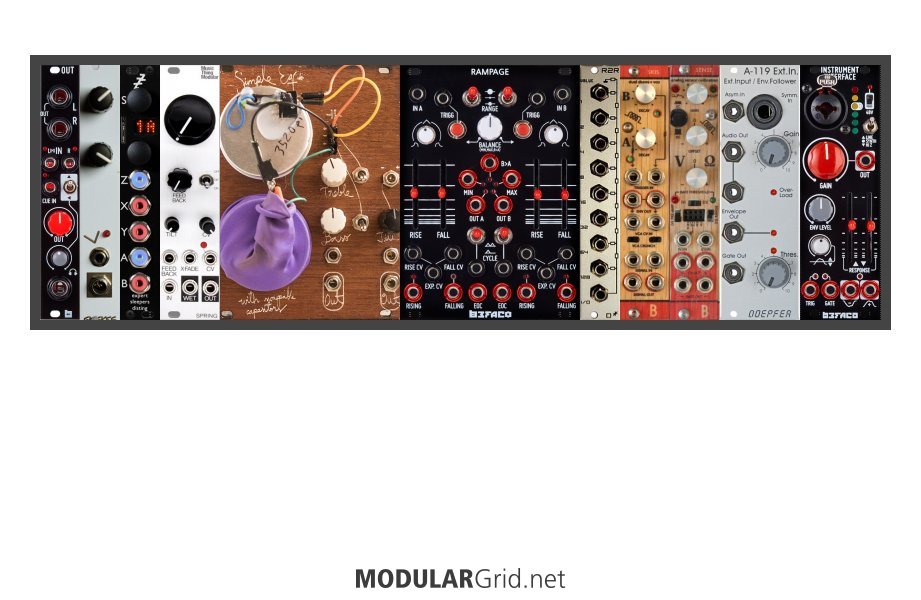
Fitted a Amphenol P-MUSB-D511-XX rugged USB B port (with a dust cover) to my Waterlab rack. From now on end I want all my connections to be ruggedised. Learning to use the Sampleslicer. It works great for building transitions between patterns and tempos. The low-fi aesthetic works for sound canvases and the instrument is inviting to techno. Great for crackles and buzzes. Next up FM radio sampling.

20210423

Helped in broadcasting(?) and managing a Frame event Merpersons: Disability, accessibility, gender and art together with Kalle Kuisma / M-Cult. The event was on Zoom.app from where we streamed it to youtube. We made the stream from a client-machine which was a guest at the event (instead of using the inbuilt Zoom.app yt arrangement) to make the online event more secure (we were prepared to drive “blocking footage” to the public stream if the session would have been compromised). The stream faced a few technical glitches but in general everything run smoothly.  I think Kalle is onto something with the idea of showing “locational footage” as a part of the Zoom session (in between talks on breaks etc.)! The event had a strong community TV vibe. The next event we’ll work on is on the 5th of May.

The water as artistic practice talk (at 2h 23 min) with Marianne Savallampi, Tuuli Malla & Rag Elnyg was really cute but they didn’t discuss water directly. Pollutants and mutations were referred to in a borderline positive light which reminded me of Toxic Progeny: The Plastisphere and Other Queer Futures (2015) Heather Davis.

20210417

I can’t believe what you say, because I see what you do (2021) Farbod Fakharzadeh. A strong critique of Finnish cultural and academic life. I feel the stagnation described in this text and I think it is the same fortress of stagnation I’ve clinged to as a career. Being white, I haven’t experienced this stagnation as a result of whiteness; I’ve imagined it as a distinctive trade of the Finnish culture and professional life. There are no careers and there is little circulation, because Helsinki is the endpoint (or Eira district to be specific). After each grant we start anew but older, perhaps energised but more often tired. So, when somebody gets a position in an institution, securing it tightly is a manifestation of professionalism. It is expected for the future prosperity of the trade.

The gig only lasts for five year anyway, after which they’ll have to start applying for grants to sustain themselves. There is intellectual and artistic progress but nowhere to progress to (as of yet anyway, a critical mass is still being accumulated!). Working abroad is difficult because we are dependent on native English/German/French/Russian speakers for engaging in “international” discussions and it feels like trends are set elsewhere. I’ve been told by some artists based in the north that they are primarily approached from central Europe because they are self-funded, efficient and bring good money to “international” projects.

I still thought Western academics really mean what they say in their books. Later I realized that they’ll do the exact opposite if their position of power is threatened.

The text echoes a strong disappointment of universities and the empty promises of western academic life. I sympathize with this. Still… Being in and from a university signifies me as a member of an elite. For me, this vantagepoint makes it possible to accept odd-jobs which I’d otherwise deem degrading (I think being a part of academia is a confidence boost more than a career). Working at (and for) Frame, Kiasma, EMMA or serving as a board-member/staff at SIC, Outo olo, Asbestos etc. can be a once in a lifetime career highlight. Recently we’ve witnessed some sliding from private gallery management positions to serve in museums. But as Fakharzadeh notes, unfortunately serving in an artists run organization very seldom provides similar career opportunities.

I’m puzzled as to how we can better enable this. We need to act fast, because culture and art funding will be severely cut in coming years. Even today we can see Finland failing to sustain the positions babyboomersbabys have established. University staff, museum directors and festival producers are chronically overworked because they can’t afford to employ staff. Which is why Fakharzadehs suggestion of administration pay cuts is great. We should investigate if setting a maximum salary of 2500€/month for all university, government and city culture/art-workers, is a step we need to consider for reaching sustainability and to better enable class circulation. The principal could be summarized as: Less money, more staff. This would mean that people couldn’t afford to live in Eira but I think this is a sacrifice we can live with.

Eventually I’d like to socialize the funds of all Finnish art supporting foundations, use there assets to buy real estates and donate them to to artist run associations. If not that I’d settle for seizing offshore funds of tax-evader or a moderate degree of progressive taxation. I wonder, if we were to de-fund the National Gallery, who in the world would care to witness this art community?