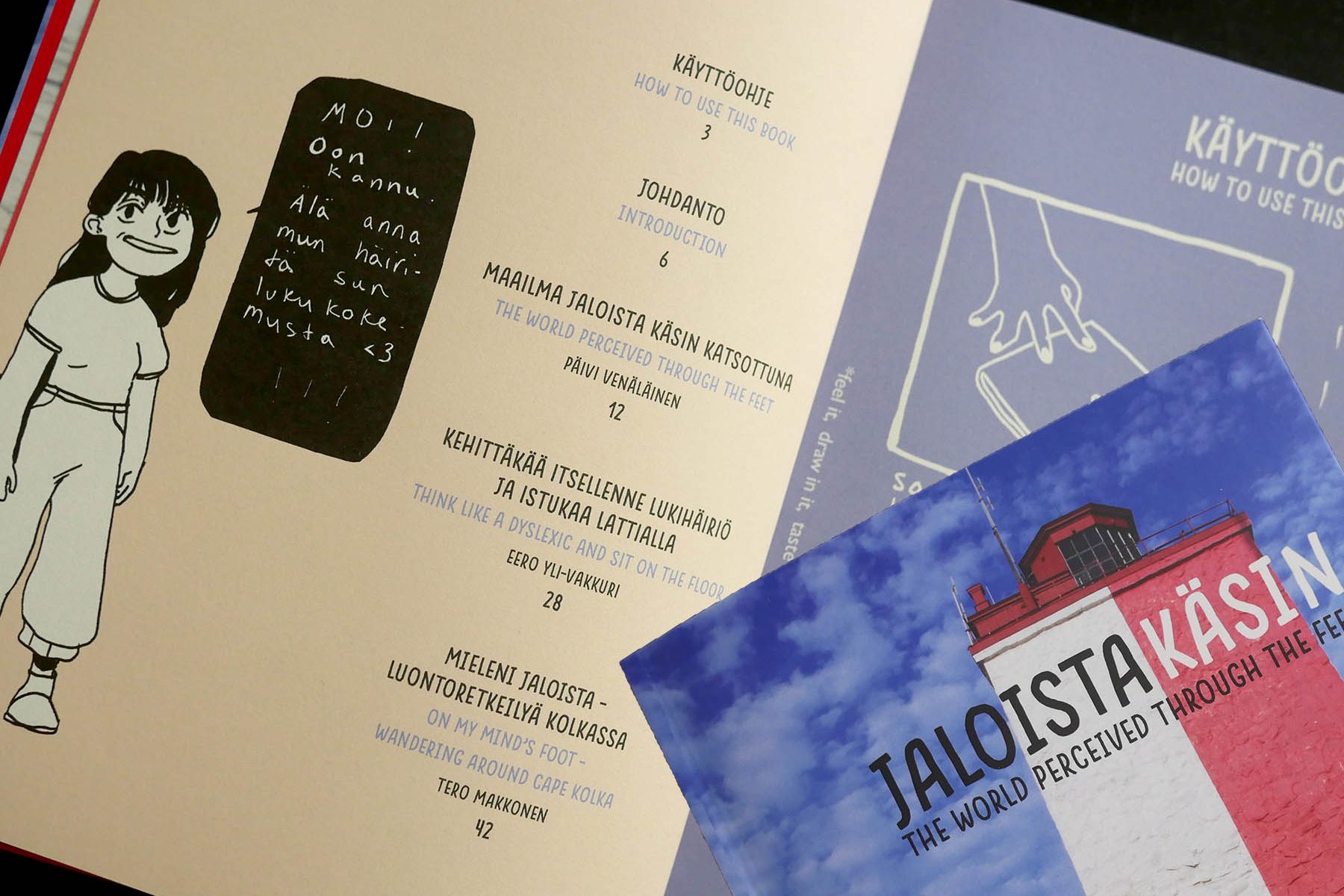
Tämä teksti on julkaistu “Jaloista käsin – The World Perceived Trough the Feet” (2019) kirjassa, joka kokosi Hyvinkään lasten ja nuorten kuvataidekoulun sekä Hämeenlinnan Aimonkoulun nuorille suunnatun taidehankkeen ohjelmaa ja tuntoja.
Lukihäiriö on luonnon lahja ihmiskunnalle. Sen ansiosta maisema on joka vilkaisulla erinäköinen. Lukihäiriöt tuottavat onnekkaita sattumia. Esimerkiksi sanat traktori ja diktaattori saattavat lipsahtaa sekaisin. Niitä yhdistää pituus ja sointi. Sanojen sekoittuminen ei ole ongelma sillä se houkuttelee esiin jänniä mielikuvia. Sattuman ansiosta voidaan vaikka ajatella että traktori tekee luonnolle samaa kuin diktaattori ihmisille. Tällaiset vahingossa syntyvät päätelmät voivat tuntua huvittavilta mutta ne kannattaa ottaa vakavasti. Lukemalla väärin voi oppia uutta.
Kouluissa opetellaan kuinka mainokset pyrkivät vaikuttamaan meihin. Opetuksen ansiosta olemme varsin taidokkaita purkamaan kuvia ja iskulauseita. Sanat ja kuvat eivät ole kuitenkaan ole kaikkivoipaisia. Lähikaupassa asioidessa voi huomata että tuotteiden sijoittelulla on oikeastaan suurempi vaikutus kuin mainoksilla. Karkkihyllyt on sijoitettu kassojen viereen jotta kassajonossa iskisi makean hinku. Vaikka ymmärtää ettei suklaapatukan ostaminen tee onnelliseksi, on sitä vaikea vastustaa kun joutuu odottamaan vuoroaan sen vieressä. Meidän tulisi harjaantua lukemaan rakennettuja ympäristöjä yhtä kriittisesti kuin kuvia ja tekstejä.
Rakennetut ympäristöt kuten kadut, ladut, puistot ja laitokset on suunniteltu ohjaamaan ihmisten käytöstä. Julkiset tilat ovat käyttäytymis-tehtaita, jotka säätelevät mikä on suotavaa ja minkälaisia suhteita voimme luoda toisiimme. Rakennukset ohjaavat meitä toimimaan suunnittelijoiden arvojen mukaisesti. Isoissa kaikuvissa holveissa tulee liikuttua varovaisesti ja puhuttua hiljaa etteivät muut kuule. Tilojen vaikutus on usein vaivihkaista. Miksi kaikki käyttävät kotona samaa vessa mutta koulussa täytyy olla erilliset tilat? Missä vaiheessa sukupuolten perusteella erotellut vessat muuttuivat normaaleiksi?
On tärkeää käyttäytyä väärin jotta voi harjaantua tunnistamaan rakennettuun ympäristöön upotettuja arvolatauksia. Älkää avatko ovea käyttämällä käsiä! Se näyttää hassulta, ihan kuin joku kättelisi seinää jotta saisi luvan kulkea sen läpi. Mitä käy jos pyrkii sisään nojaamalla kahvaan pepulla tai hyppäämällä ikkunasta? Pääseekö silloin oikeasti sisään vai ilmestyykö tempauksen kautta johonkin toiseen paikkaan? Kannattaa kokeilla. Älkää istuko tuoleilla, ne tekee pahaa selälle! Kannattaa opetella kyykkyistunta ja pitää riittävästi taukoja. Missä vaiheessa tuolit korvasivat yhteisesti istuttavat penkit?
Väärin käyttäytyminen olla vaikeaa jos on liikkeillä yksin. Siksi kannattaa tarttua toimeen kavereiden kanssa. Jaloista käsin -leirikoulussa harjoiteltiin yhdessä tekemisen avulla virittyvää kriittistä toimintaa. Hilppaisimme metsään, äänestimme koko ryhmän voimin mihin suuntaan liikuimme ja mitä teimme. Kävelyn päätteeksi muovailimme kulkemastamme reitistä savikartat. Ne koottiin yhteen, jonka jälkeen kävimme kokemusta läpi tunnistaen mitkä paikat ja luonnonkappaleet vaikuttivat toimintaamme. Tällä tavalla kaupungit pitäisi suunnitella.
Minne tästä? kävelyharjoitus. 8-120 osallistujaa.
- Nimetkää ryhmälle puheenjohtaja ja ääntenlaskija.
- Puheenjohtaja esittelee harjoitteen ja pitää huolta että kaikki ymmärtävät kuinka kävelyn aikana toimitaan.
- Puheenjohtajan tehtävä on kutsua äänestys koolle sitä mukaan kuin osallistujat tekevät aloitteita. Hän ei voi äänestää, eikä tehdä aloitetta.
- Ääntenlaskijan tehtävä on laskea äänet ja pitää huolta siitä että valittujen aloitteiden käytäntöjä noudatetaan.
- Äänestäkää mihin ilmansuuntaan lähdette kulkemaan.
- Ehdotus joka saa eniten ääniä voittaa ja sen määrittämää suuntaa liikutaan, kunnes joku tekee ensimmäisten aloitteen (ensimmäistä suunta-äänestystä ei lasketa aloitteeksi).
- Ryhmän on liikuttava yhtenä massana jotta että kaikki pysyvät kuuloetäisyydellä.
- Henkilö jonka ehdotus on valittu vie joukkoa.
- Ääntenlaskijalla on velvollisuus pitää huolta että suunta pysyy tarkkana.
- Jokainen osallistuja on velvoitettu tekemään yhden aloitteen josta äänestetään.
- Aloite voi koskea mitä tahansa toimintaa. Esimerkiksi mihin suuntaan risteyksessä käännytään tai miten toimitaan vaikeasti ylittävän esteen äärellä.
- Aloitteen voi esittää heti kun haluaa. Sen esittämispaikkana voivat toimia polunristeykset ja merkittävät luonnonilmiöt.
- Jokaisen osallistujan tulee esittää yksi aloite.
- Kun aloite on esitelty ryhmälle siitä äänestetään.
- Äänestystulos päättää ryhdytäänkö aloitteen mukaiseen toimintaan. Kaikki paitsi puheenjohtaja saavat äänestää.
- Kaikkien on osallistuttava toimintaan joka on äänestetty suoritettavaksi.
- Mikäli ehdotus saa puolet äänistä se toteutetaan ehdoitta. Mikäli aloite saa alle puolet äänistä, jatketaan edeltäneen aloitteen määrittämää toimintaa.
- Ainoastaan seuraava aloite-äänestys katkaisee edellisen aloitteen määrittämän toiminnan.
- Kaikki aloitteet joista äänestetään lasketaan aloitteiksi.
- Jokaisella on velvollisuus huomauttaa mikäli harjoite äityy epämukavaksi ja pyytää puheenjohtajaa pysäyttämään eteneminen.
- Pysähdys kestää siihen saakka kunnes joku tekee seuraavan aloitteen tai epämukavuus on muuten väistynyt.
- Kävely saavuttaa puolenvälin kun kaikki ovat tehneet aloitteen josta on äänestetty.
- Tämän jälkeen äänestetään uusista säännöistä ja palataan alkupisteeseen.