20160830

The Burqini/Veilkini/Modest Sea Alternative Swimwear etc. are brilliant outfits for the beaches of tomorrow. As the ozone layer shrinks these outfits will be recommended for everyone spending time in the sun.

I’m curious about the Islamic clothing code. According to the Islam and clothing wikipedia article, there are different guidelines for “clothing inside and outside the house”. I’m curious to learn how social medias have affected these guidelines. Social media’s mix private and public spheres and harvest personal data for their databases (biometric data, location data, photos used by mobile phone security applications for facial recognition services etc.). For example, mobile phone photography applications often allow user to backup images to private online folders, which are only accessible for the user. At glance the are private spaces but the “terms of use” of these cloud based storages allow some companies, to use the data any way they see fit. Photos that people allow software companies to use, are being fed for artificial intelligences (which try to learn how to recognize objects in pictures) and facial recognition software etc. This means that computers look at the photos people take in private spaces and even interpret them! I’m curious to learn how people who dress according to the Islamic clothing traditions approach these services. How is biometric data and data about the user’s body movement (which I think exposes us more than images) seen in this perspective?

I’d also like to learn if are there of guidelines concerning housing cooperatives and condominiums where occupants share some living spaces with other occupants. How does contemporary architecture of Helsinki approach these kind of sensibilities? In the past the city has not been concerned if I see into my neighbor’s livingroom. Houses have been built so close to each other that citizens can monitor each other. I could argue that the possibility to monitor neighbours is even a part of the design of our cities: Making both work and living spaces transparent for the public eye is a common agenda for our architecture and technology. From the perspective of economics there is no difference between the inside and outside of the house. Both sites have been pierced by the same technology.

20160828

A culture can be called “civilized” only when it’s discovered a cure for hiccups. 

20160824

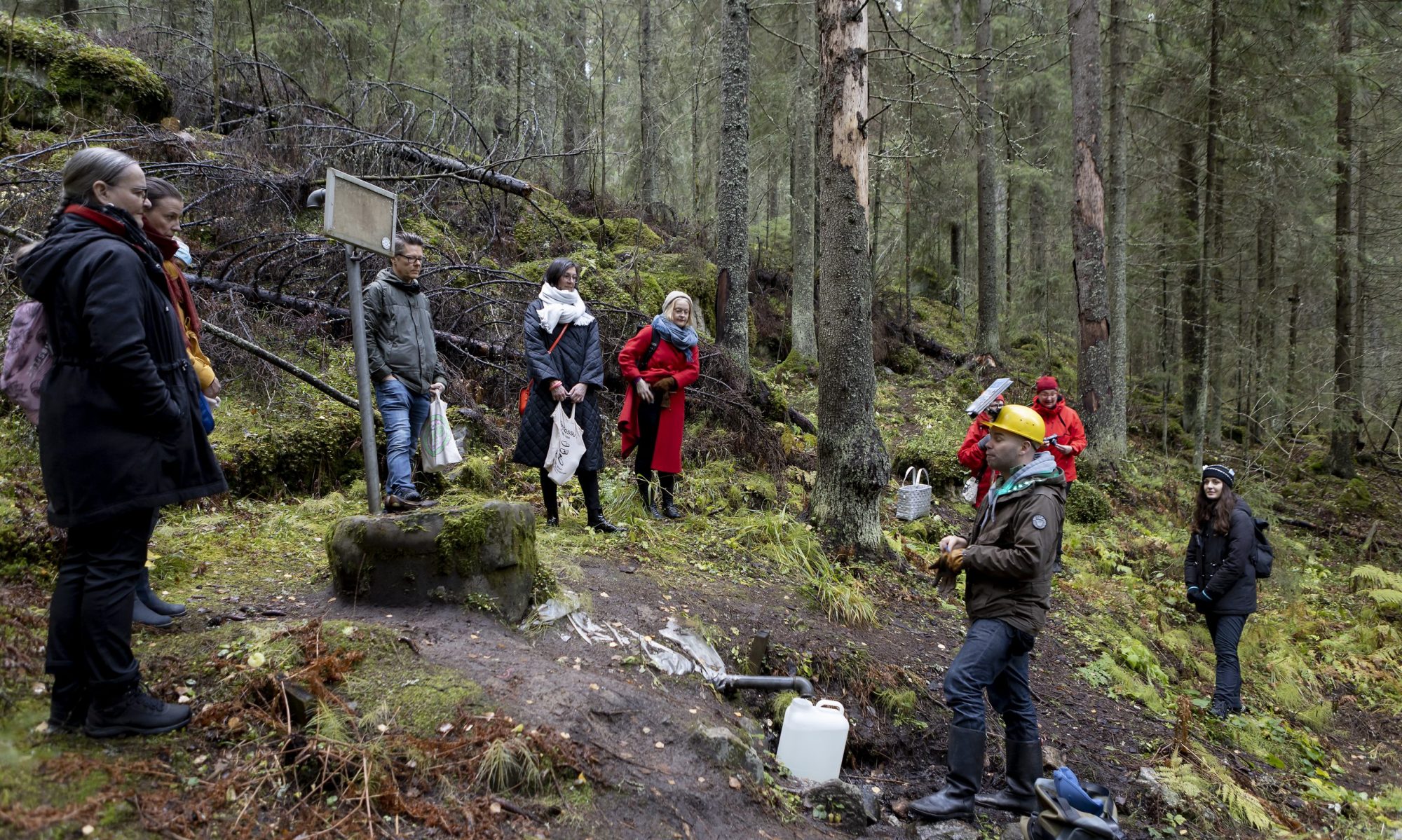
Met with Andrew Gryf Paterson and Alexander Fleischmann at the HIAP residency in Suomenlinna and participated in an informal stroll around the island, which was organized to discuss “Undisciplinarity”. The theme is related to Paterson upcoming PhD thesis. The event was a part of the HIAP public program. I got to know Paterson when he was working for Pixelache and witnessed his impact on New Media Arts scene in Finland. Pixelache events and festivals brought together craftspeople, farmers, junkyard scavengers, programmers, circuit benders and artist working with video/sound. Rather than identifying and boxing in different genres of new media arts, Paterson was interested on what kind of social and ecological implications different technologies have.

He invited cultural heritage specialists, craftspeople and new media artist to the same front. The technologies they used were not judged based on how old they were – Digital dongles and stone axes fitted on the same desk. For him it was more important to find commonalities and joined motivations across different fields of creative life. It is important to organize behind joined dreams concerning the future and not to allow contemporary technology to segregate us (This premise has practical use in organizational tasks: Hosting a meeting with good food is way more efficient than sending emails).

Paterson has been influential to the development of Ore.e Refineries. The Pixelversity “Unconfrence on Art and Sustainability” in 2011 was a particularly fun event and we launched the NO-CHAIR-DESIGN campaign there. He’s currently working on a text “Reflections on Soil Future(s), Present(s) and Past(s)”. I’ll try to cover it in detail after it’s been published the RIXC “Open Fields journal”.

Got a PO-14 for a -60% discount! and now I could make gig using only Teenage Engineering gear. Also got the Cyanogenmod 13 (Based on Android Marshmallow 6.01) working on my Galaxy S3 (I9300). The device is slow but usable (I might have to return to Cyanogenmod 11 or other rom variant to make it snappier). Currently editing the Grey Cube Gallery video documentations.

20160822

“Today’s theory demands transformation” (or something like that) cries Groys in “In the Flow”. Last week featured many transformative experiences as we hosted the “Horse and Performance” course for students of the Theater Academy Helsinki together with Pietari. The week long contemporary-horse-culture course ended in a full day of horse-animal-human-exercises, which the eight participants had planned and conducted for our group. The day was long and I lost my bearing on which inputs and ideas were provided by the horses and which were of human origin. During one set of exercises I lost track of who was an animal. Reports and photos of the course are being processed and will be publicised on the Trans-Horse blog during the following weeks. The “Theatre and Dance” magazine will also publish a small text about the course.

Paula published the “The Bat Simulator” video last week (I’m the bat). The video got me dreaming of a new leather jacket. The one on the video was found on the street and has since been broken. Timo has published “Last Worker Standing” which casts an eerie look at the concept of “New Work”. He call it an “Dyst-ironical speculative fiction machinima”. I’m inspired to make a song to accompany the video (A Deep Time Marxistic Étude). Timo’s work would go together with Paula’s recent “Harmaja +10 länsiluode 35m/s” piece presented at Hippolyte gallery.