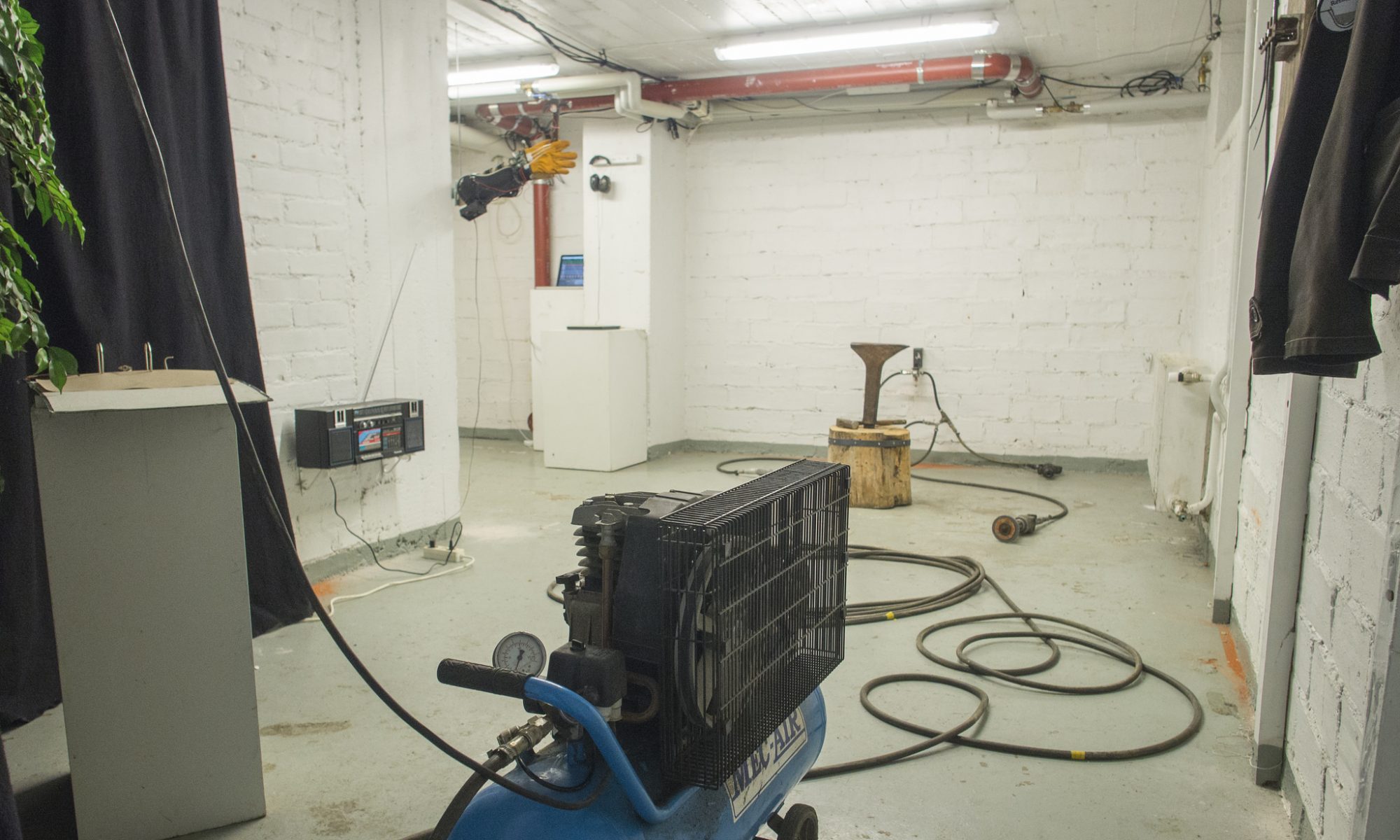

Performing the Fringe exhibition at Konsthall C was rewarding to setup. Most of the artists in our group came to Stockholm, where we were warmly welcomed by Erik Annerborn & staff. On site we had the pleasure to work with Kaisa Sööt who had designed the exhibition architecture. She had build wavy-benches based on a park seating design spotted in Hökarängen. A localized furniture architecture development effort (reminded me of NCD-C swingers club designs).
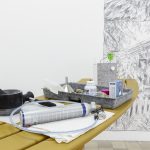
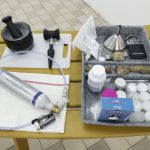
I arrived a day before my performance to extract samples from stone architecture using kitchenware from Ikea. A meat-hammer served as a mallet and a regular table knife as a chisel. I pulverized the rocks using a Ikea stone mortar & pestle. The powder was gray and dissolved (seemingly) well into the water (0,3 mg per liter). Polukord noted that granite ore contains metals which caused some concerns (I wonder if it’s possible to separate metals from ore using a magnet?).
My portable CO2 regulator worked well and produced ~5,5 bars of pressure inside standard 1,5 liter plastic bottles, which I used for water-to-gas agitation and serving. The gas was from a local shop which stocks consumer grade 475g CO2 tanks (CGA320 treads). Interestingly the plastic bottles stretched when I added pressure and when shaked the plastics retraction would add to the pressure, causing the content to retreat back towards the regulator. In my first rehearsals this counter pressure caused the valves to come loose.
The next day I performed for a private family which lives in the district. The family connection was facilitated by Annerborn, who introduced me to them in person before the show. I executed my performance in the family’s kitchen. I had some trouble with my sound system, the shape of the space caused a feedback loop, which was hard to resolve. I attempted to do the talk bits in Swedish (my Swedish language skills are fringy, which works well with the project theme) but turned to English midway and the kids lost interest soon after. My statuesque warm-up dance moves were constantly commented by kids, which made pacing difficult. The performance was a delightful mess.
The family was very concentrated on the presentation. I had some minor problems maintaining cohesion, the event challenged the artistic integrity of the piece in a good way. A beneficial learning opportunity and I think the family enjoyed the chamber performance too. We chatted a bit after the performance and they showed their backyard. I was donated a piece of rock from their garden and prompted to make mineral water from it.
The coronavirus didn’t change the performance much. At the time there was no social distancing etiquette guidelines in place in Stockholm (a week an a half ago). We did maintain a little more distance then normally and I executed extra caution in the water preparation. If the family would have wanted I could have made the performance outdoors, in which case it would have been a typical lecture-performance.
Our exhibition opening was cancelled, even so there were some 10 visitors at the space for the opening. This was just enough for setting the mood and actually made the social situation more dense than normal openings. The fewer people there are the more focus they demand. Performances for big audiences are more relaxed because the crowd behavior is more easy to react to than individual gazes. I prepared different waters for the guests and people were exited to drink them (particularly the gravestone water). When walking back to the hotel we shared a pleasant chat with Alexey.
Katarina Frifarare had a parallel opening in the Konsthall C Centrifug space. The Centrifug can be booked for exhibitions by anyone and the dates of the show are set randomly. We should have something like this in Helsinki too, in the Taidehalli space? Frifarare’ exhibition was a leftist analysis of women’s textile work and made a good match with our exhibition.