20191114

A Promise to Aspen (2018) Mari Keski-Korsu. A text from BODY OF US exhibition publication. Keski-Korsu exposes the industrial undertone of contemporary Finnish forestry and calls its global expansion efforts to shame. The text offers an interesting reading of harvesters by comparing the distance they provide their operators to the distance “war machines” have given to battle. The text celebrates trees, but I’m not sure if “trees” even exist. I find it hard to empathize with them. They live in a different timeframe, continue living as logs and I have no idea what they enjoy. Aspens for one are not individuals, they are closer to ecologies. I don’t know what trees are. I agree with Keski-Korsu that anthropomorphisation is not a problem, it’s a solution because it exposes the power dynamics of our relations with non-humans (this idea comes from Jason Hribal).

The forests can be considered as an oppressed group because they simply have no say over how humans manage them or use the wood. Patricia Hill Collins defines in her book Black Feminist Thought (1990) the matrix of domination and how intersections of oppression are structurally organized. I believe these domains of power can be analyzed and used as an empathy exercise with any group – human or non-human.

Anthropomorphisation doesn’t mean that we shut out species’ specific needs. On the contrary, it helps humans to understand. It should be in the toolbox of new empathy. The kind of new empathy could bring human species to some kind of other level, to make more balanced narrative for this species. After all, empathy has been a building block for the flourishing of this species as it can be considered a basis for collaboration.

Today is our second tree-sound session with Johannes. Build a monstera leaf shaped wooden contact mic frame (I’ll glue four piezos to it). My dremel broke (attempted to grind trough 9mm birch plywood) and it’s not the same issue as last time (got a new one used for 35€). Bought an oscilloscope for 35€ (some potentiometer contacts need cleaning).

Listening to There Existed an Addiction to Blood (2019) Clipping. Hits a nerve while cycling in the gloomy darkness of Helsinki. The beats, broken as they are, feel warm. The lyrics are incredible hip-hop/noise-noir. I identify heavily with the Death Stranding main character Sam Bridges. I haul everything on my back. I particularly remember taking all my tools to Pyhäjoki in the spring using three banana-fruit boxes (pulling them on a cart) and two backpacks. Barely fit trough the train doors and I think I damaged my shoulder on the trip. Not having a driver’s license is starting feel like a burden. Carrying materials, instruments and tools to job-sites and gigs doesn’t feel fun and I feel the trauma of past efforts weighing in on me. Like reversed bodybuilding. My feet get sore from excess walking, my back aches when I lift shit (still feel a CNC machine I pulled inside a van 2002) and shoulders hurt from the tremors of my crappy power-tools.

My income is based on my able-bodiedness and recovering takes longer then it used to. I fear I’m loosing gigs because I can’t bounce back to working condition as fast. I need some kind of transportation to carry my gear around. Or change the way I work. I want to evolve into middle management.

20191112

Cyberwhores of late capitalism (2019) Tamara MacLeod. I begun to read the article as a book review but it soon turned into an insightful analysis of how corporate control over the internet impacts the possibilities marginalised groups have in organizing and surviving. MacLeod identifies that the power capitalism has over us, is ultimately the power to control how, where and when our tangible and virtual bodies move. Internet offered folk who have been confined into cities (to idle indefinitely, waiting for deployment as a labor force) the “right to roam” and seek out new economic possibilities.

Sex work is a good place to start in any discussion about economic oppression, because it has intersecting demographical qualities. People of all classes, ethnicities, and genders enter sex work as a means to acquire wealth that they are otherwise excluded from.

In countries which criminalise sex work, the internet has been revolutionary for sex workers in two fundamental ways: It has allowed us to establish commerce in a space free of persecution and with easy accessibility (it is easier for a poor person to make money with an internet connection than without one); and it has supported the development of international communities, providing solidarity, safety and access to resources.

Any discussion about labour is a discussion about space: where is it done, and what does the nature of the space mean for the worker? The enclosures under feudalism, the entrapment of women in workhouses and the home; these were deliberate responses to disruptions of class oppression. To liberate the worker from the boundaries of embodiment, time and space – this stood to be the most promising disruption in human history, and therefore meant that cyberspace had to be colonised by the same ideas that make systemic change so difficult in our immediate environments.

20191108

Knowledge-speculation During Climate Crises ­- ”When You Say We Belong To The Light We Belong To The Thunder” at EKKM (2019) Jussi Koitela.

[A]ddressing the climate crisis and crises caused by human agency and western thought, there is a need for exhibition methodology which handles much more complex and intersectional approaches than the current representational and politically reductive modes of presenting artworks, research, or critical discourses. In many cases, these models reduce the meanings of artworks and artistic research (which contain complex processes of experimentation and exploration, references to multidisciplinary theoretical conversations, and multivocal political debates) to discourses which highlight the most straightforward, and populistic aspects of the works.

What becomes evident after experiencing the exhibition is that it’s crucial for contemporary art institutions to support and foster long-term projects of curators, institutions, artistic researchers, and practitioners which manage to create new forms of knowledges regarding complex urgencies such as contemporary colonialism, climate chaos, and nationalism.

He seems very impressed by the exhibition curated by Heidi Ballet and hopes that it will serve as a point-of-departure for future exhibition making processes. I wish I’d share his optimism. I fear the process of “exhibiting” is categorically self-affirming. Exhibition architecture, so very rarely, allows people to discover themselves forming disruptive assemblies. They emphasize professional-flâneuring, which echoes work or more accurately faking working (which is faking knowing whats what). Exhibitions allow people to discard disruptive inputs. With “disruptive” I don’t mean violent.. More like, disruptive as in discovering how to be a parent. Every learning experience is disruptive and I think learning by doing is most effective (workshops are key).

We had our first exhibition building and sound-session with Johannes yesterday. We also visited Oksasenkatu 11 for the MEMExhibition by HYPERREAALIYAH. The artist has written an intriguing paranoia-inducing text kuinka lakkasin olemasta ja opin rakastamaan meemejä* (2018). We discussed how (or if) browsing internet has taught us to desensitized ourselves. Shared an anecdote from Outi Heiskanen, who recalled playing with severed horse testicles in her youth (her father was a vet). The balls bounced like we presently know plastics to behave.

Visited Timo Bredenbergs Without Friction exhibition at Muu gallery. I enjoyed his video, it felt like a an archeological excavation of present day financial capitalism executed from the future. We were presented with broken 3d renderings of New York City landmarks, important for the recent history of global economics. The architectural views were followed with text snippets, which felt like a future archeologist field notes and glimpses of shaky virtual hands, which attempted to interface with the information. The hand gestures echoed signs stock traders used in the past to signify transactions. I think the archeology of hand gestures in itself would be a really interesting exploration.

Digital Frictions: Where Code Meets Concrete (2019) Shannon Mattern. The article uses a still of Bredenbergs video as an illustration and explores the frictionlessness nature of economic-cities. As a reply for the text we could argue that creating patterns and shapes which refuse to align with contemporary spaces (both digital and tangible) is important, because odd designs cause friction, which is need for developing energy.

Every engine needs friction. I guess an analogy for accelerationisms would be “to purposely oil a machine until it looses friction”.

As an exercise for exploring friction: The hands of partisipants could be oiled (with olive oil) and they would be guided to touch each others hands, so that the frictionlessness, would cause the participants to loose awareness of the other persons touch.

20191104

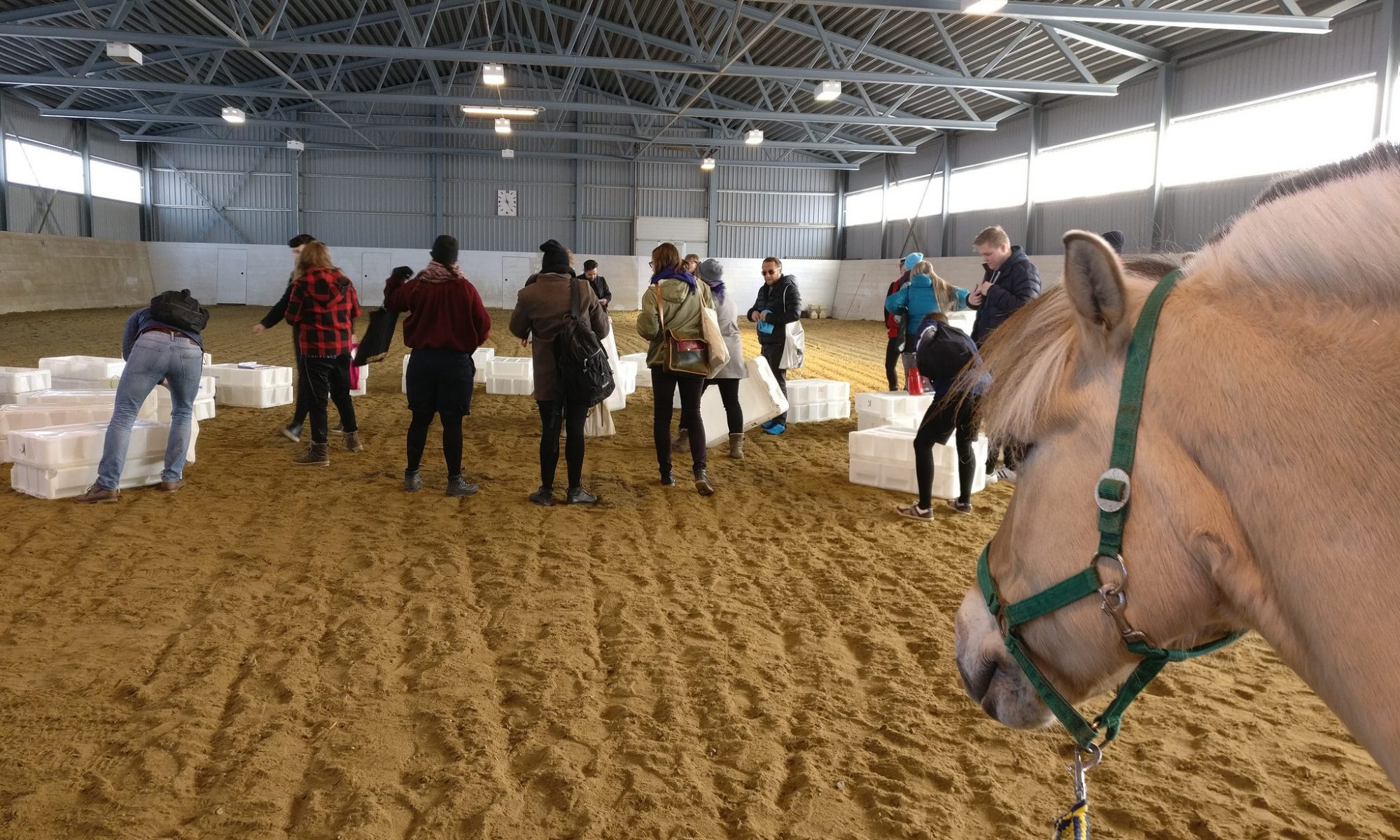
Returning from a teaching gig at Villa Arttu youth art school in Hyvinkää. I had the opportunity to spend a weekend with 28, 12-17 year olds, teaching “Performance Architecture” (as defined by Schweder) by using various movement, body awareness and voice based exercises. Participants came from Rovaniemi, Hämeenlinna and Hyvinkää. The group was divided in two batches which alternated each day between my workshop and a sound/media sessions taught by Simi Ruotsalainen.

The “Performance Architecture” workshops started with fake-laugh yoga and an exploration on how voices resonate inside bodies. Voice-making was framed as an internal-organ sculpturing exercise. Participants massaged the insides of their mouths using their tongues and attempted to identify where different tones resonate from. The idea of sound-making as an internal-organ sculpture practice was inspired by әṾӨȻΔ𐐉 -exhibition by Jenna Sutela & Lars TCF Holdhus at Sinne (2015). After the warm up we begun massaging your imaginations in a “What if…” session, in which participants only communicate by asking “What if…”. This exercise is something I picked up from a seminar called “Performative Utopias” organized by Reality Research Center in 2013 (for Baltic Circle).

Then we continued doing echo-izings: Each group member was expected to utter a word or tone, which others repeated. The word or tone had to relate to the space we were in. The exercise continued until everyone had shared their voice. The idea that everyone has to speak out for an exercise to end, was motivated by Peggy Pierrots community talk-shop guidelines from 2017. We practiced deep breathing, standing and walking in a confined space. These exercises were based on basic contact improvisation teaching techniques: The group begun by moving in a rigid grid pattern (90° turns, slow and fast walking). After a while they were allowed to stop their movements when they felt like it. The act of stopping was framed as a personal political strike, which offered an opportunity to reflect the situation. Striking as an action comes from an idea by Jussi Koitela: Activism becomes political, when people stop being “active” and reflect their situation.

After the trust within the group was founded, they begun to use the space more freely and we combined echo-izings to the movement. When people spotted motivating objects, shapes or things in the space, they were advised to stop, to point at the thing and voice their observation. Group members then followed the action: Stopped, pointed at the same thing and repeated what was said about it. This method of reading a space collectively was inspired by Patterns of Life by Julien Prévieux (2015). Participant were then advised to use the same technique for reflecting the joined movements and actions, that were emerging from within the group. Then the group spend a long silent session moving and exploring each others clothes, garments and jewelries. This lead into a very nice session, were people touched each others softly and recognized each others. Each phase of the exercise was discussed collectively before progressing.

Then we performed a repetitive minimalistic stepping dance choreography, which I saw executed as a part of the “Monstera” performance by Essi Kausalainen. I consulted Kausalainen about using her pattern in teaching and got some insight on it. The movement was framed as something intrinsic to living things and when setting it up for the participants I compared the dance to the movement of plants when they are seeking light. People associated the movement with something they do while “idling”, when waiting for a buss etc. We then performed very long sessions following the choreography and discussed what it felt like. People experienced the movement as soothing and enjoyed performing it collectively. We executed it in a large circle and the size of circle alternated during each session. It felt like we were breathing. I recorded the rhythm of our feet and we listened to the recordings, discussing how movement can be documented and how we can hear movement articulated. People seemed to really like listening and spend up to 10 minutes in silence, returning to the rhythmic noise they had produced earlier.

The group was then divided into 3-4 sub-groups, which were tasked to invent their own movement patterns. I presented the authoring of these patterns as a process were we write shapes inside our brains and recall them using muscle memory. We contemplated the ethics of writing inside an other persons brain and tried to visualize how our brains were altered by this experience. Reading was presented as a method of writing into oneself. The sub-groups then developed their own patterns in semi-privacy. After a while we returned to the collective circle, groups taught their pattern to others and performed them for as long as it took for everyone to incorporate them. After this we performed all of the different dances, so that they followed each other with out any forced direction. These sessions were recorded and we listened to them reflecting the experience. Here is a clip from the first session (12 students moving).

The event ended in a soft-lecture, trough which I attempted to explain what “performativity” and “post-structuralism” are. These sessions were more like chats as participants could ask questions and share their ideas during the presentation. The lecture was loosely based on Richard Schechners Performance Studies book from 2013 and the group was tasked to contemplate how repetition inscribes attitudes to our bodies. The workshop was a continuation of the “Post-Structuralism for Kids” sessions I taught in the same school in 2017. There is a short text about it in Finnish: Kehittäkää itsellenne lukihäiriö ja istukaa lattialla [Develop Dyslexia and Sit on the Floor] (2019).

20191101

Added some old texts online. I really like “Fade in, Fade out”! I have no idea how it was received by the public back in the day but I hope someone will enjoy it now:

Continued with my Simple EQ* build and added it on modulargrid (the Tilt EQ channel is still giving me trouble). Also build a 12v to 9v transducer which has the same dimensions as a 9v battery and a 10pin ribbon cable connector so that I can power it from my eurorack. The first unit is a proof of concept and I’ll build a new one with a big heat sink. I’ll use it to mount 9v circuits to my rack.

A nice short documentary The Delian Mode (2009) by Kara Blake. It gives a good overview of Delia Derbyshires work at the BBC and her influence on electronic music. She remembers the sound of hoofs on cobbles, she heard as a child as an influence on her appetite for polyrhythmics and recalls that the noise of air raid sirens sparked her curiosity in electronic sounds. There is an archive of her work online, with entries like: The Delian Mode (1963).