20230302

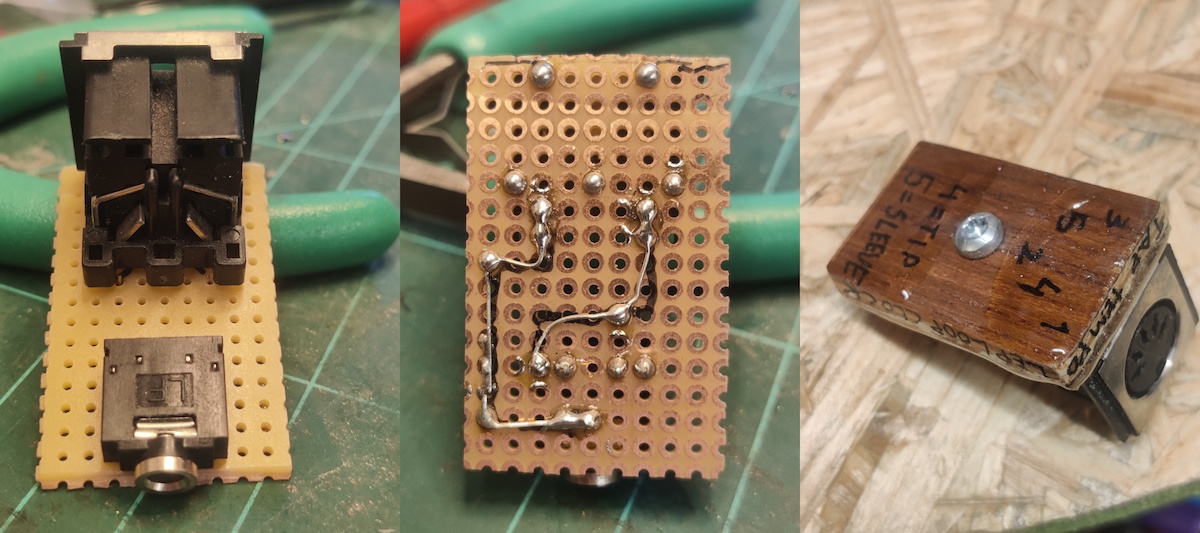
Finally got my Leploop v3 midi out figured. In retrospect the solution would have been possible to reach just by following the manual. But with all the other beautiful kinks of the device it was difficult to trust my judgement and intellect. I reached out to the designer Tonylight and got a simplified guide.

Build a midi 5 pin DIN to 3.5mm mini-jack adapter with the specifications: Midi 4 to jack tip, 5 to jack sleeve. Attach the adapter and set Leploop CLOCK to EXT. Tap the tempo using Sh1 button and external devices will follow Leploop. In this configuration external midi can also be used to control Leploop and the clock sends out sync acting as a midi trough. RATE CV IN controls the LFO rate with external CV (but not the tempo).

My gray literature curiosity with synth manuals and tutorials is being challenged by esoteric documentations such as the Leploop zine and Whimsical Raps techno poetics. I think Leploops underground aesthetics, which desperately reach for clarity but suffer from bad spelling and stuff lost in translations are more credible then Whimsical Raps aestheticizations. The latter present learning as personal growing and sensitization. But I prefer learning which hurts, which conveys a desperate desire to connect yet fails to. The Leploops manual is cringey but I like it because it make me appear smart.
tworoundrobins addresses the same mystery element of sound-devices in a recent should we demystify gear? monologue.

Developed a most rhythmic city soundscape assignment for a group of curators/artists visiting Helsinki as a part of Kunsthal Nord field excursion organised by Tina Madsen. Assigned them to send me field recordings with the promise I’d use their clips for making DnB. I’m chopping up the sounds they send and used them as samples in schollz amenbreak script for Norns. And replied  back with 40sek-1min DnB riffs bundled with suggestions for dodgy bars around the Kallio district. Took them to Sompasauna to work&bathe and introduced them to Miina Hujala (by chance to Otto too) & Alkovi.

20230125

Visited Oodi Maija-sali for the SOLA Post-Festival Club. Came late, left early but enjoyed a cinematic performance by Minerva Juolahti. They stood in front of the audience in a dark room with their back leaning against a huge black stage curtain and held a mirror which redirected a projector light beam towards the audience. An odd drone was heard and the mirror trembled a bit as they held it. The reflection which they reprojected onto the floor in front of them shivered like a tongue trying to keep still. The projector showed a slow film of intersecting squares, which corresponded with the shape and size of the mirror. One of these beams remained in place, constantly directed at the mirror. The black curtain folds bent the moving white rectangles, allowing gradients to form on the curtain velvet, which made them appear as floating metal sheets.

This scene lasted for quite a while. The floating metal sheets passed the screen and only the beam directed at the mirror was left. Juolahti then turned the mirror and directed its beam to a disco ball which re-reprojected the projection so that the entire room and everyone in the space was touched by miniscule square rays of light. The projection square then began moving upwards disappearing outside of the screen. As it rose Juolahti followed its movement with the mirror they held and as it went over their reach, they lowered the mirror and suddenly a hairly drone whipped across the room. The sound was revealed emanating from the mirror sheet. The shivers of the reprojections had been produced by a solid transducer attached to its back, which revealed the drone and the reflection being of the same.

I would have loved to listen to the gig with a light to sound device. Ilpo Numminen played the Oodi-modular and presented it as an “instrument” which was a delight. The gig explored feedback loops and krell-like patches. Looking forwards to visiting SOLA on Friday too for gigs by Tomutonttu and Tina Mariane Krogh Madsen. (The gigs where last May)

20230109

Nearly finished with Assembling a Black Counter Culture (2022) DeForrest Brown. The book reads as a cross between a blog, a music review magazine and a Marxist analysis of Black American culture. It meets all the criteria of a proper winter holiday read: Nerdy details on synths, snippets of interviews and gossip of notable techno musicians bundled with leftist rants. Brown wants to make it clear that techno is Black which I’m fine with but their mission is so defined that some argumentations cut corners. For example they put a lot of effort in proving that originally acid (in music) had nothing to do with drugs and blame the emerging techno-scene in the UK for building the associative link between drugs and techno. They conveniently leave out that funk, which is framed as a partial foundation of Detroit techno, was a psychedelic movement. Their effort to sever the techno-is-for-drugs link is just in the sense that the US War on Drugs targeted the Black communities disproportionately. There is also a strong judgemental tone to the manner they present the goa-trance-scene, which pains my heart as I came to techno largely trough Texas Faggott and a like. Not for the drugs but for the fun (perhaps trance deployed humour as a substitute for soul? Silverio for the win!).

Brown uses Detroit as a lense for portraying the US from the perspective of Black cultural development. Post jim crow era folk moving from the South to work in Detroit assembly lines, emerging as consumerist middle classes and helping to make Motown to what it was and then being disregarded by industrial capital. The ruins of these developments were later reclaimed for techno, which is presented as soulful emancipation, a process of de-hierarchicalizing the record label industry and distributing production. This story was first passed to me by Jori Hulkkonen during a 2011 Kotimaan teknokatsaus vol. 3 interview (starting from 16:41). The exact bit was cut out from the final interview but Hulkkonen also built a globalist connection between post-industrial youth learning to program to employ themselves (and later to surpass the burden of their [working]class) in Kemi and the Detroit landscape where the Belleville Three developed their sound. The repurposing of abandoned factories as stages for raves was also discussed, which links to East-Berlin too.

Brown mentions Basic Channel (and Hard Wax) but does not explore for example Maurizio or Mark Ernestus’ involvement with Ngadda, which I’d love to have had their take on. Browns Marxist analysis of Black workers and Black cultural expressions is excellent and techno serves as a perfect route for exploring workers transformation from labourers to information-workers. I particularly enjoyed their critique of Kraftwerk’s robotique aesthetics, which celebrate the absence of soul in creative expression and how they contrast this to the Black experience, where artistic expressions cling to soul to combat the robotique reality of everyday and the past of slavery. My peer-group of the white christian punk, electronica, trance and self-educating diy mayham, where youth seeks to destroy patriarchal society by destroying themselves as workers doing drugs, general antagonism and/or criminal records is not celebrated by Brown.

Art is the infrastructure of the imagination #ॐ. It’s not categorically good but something to build thinking on.

20221117

Fun electronics projects for solarpunk: Build a Solar-Powered Music Synth (2022) Iffy Books which is inspired by Ralf Schreiber solarsoundmodule (1996). Schreiber’ step-by-step manual on the latter beautify, as is the guide for suneater which links to Mark Tilden’s and Eric Seale’s work on solar motor designs. I’m planning to build a water-pump and sensor element for a water-purification machine, which could react to changing water levels & quality and user interactions. It’s supposed to become a fountain of sorts. Desperately keeping it non-technical, so that the tech part (which currently motivates me more the then conceptual function of the machine) won’t take over how the machine is interpreted. Ad-hoc’ish buggy gadgets like the suneater seem to work in the favour of looser interpretations. They have agency.

Also acquired a kintsungi kit to restore earthenware ceramics which were prepared during the previous Experimental Clay Workshop 2. The metals used in the technique might facilitate electronics too. Perhaps a porcelain cup as a electra distortion unit? Unfortunately the bomb-shelter studio is too cold to for intricate work.

I’m working on too much text and my neck is sore. I have art-reviews to edit, accidentally made a short column for a political journal and I’m scheduled to start working on an article on sustainable art residency culture soon. Also working on a institutional critique campaign which will likely be announced later this month and preparing a horse course for TeaK. Had a short lecture in the Fine Art Academy too (and examined a thesis there too). The students were expecting a talk on ecological art, so I had them form a bus row from chairs and took them on an imaginary road trip on Suuri Rantatie, chatting casually about horses. This year I’ve taught or had lectures in Aalto university, Fine Art & Theatre Academies, the Kankaanpää Art School and co-organized two workshops.

The book “Performance Art in Practice – Pedagogical approaches” (Worthwise 2022) edit. Aapo Korkeaoja, to which I submitted an essay four years ago is being launched next week in Turku. The text I wrote for it is more relevant to me now then when I wrote it. Here is a n extract which starts my text

I have always had issues with authority. This family tradition was passed on to me by my mother. I get offended when people tell me what to do and for this reason studying has been and still is challenging. Luckily Finland is a welfare state, and in the nineties primary school teachers were idealistic. They believed that everyone is good at something and their trust convinced me that my dissident attitudes would find acceptance in the field of art.

I try to pass on similar hopefulness when I get the opportunity to teach. In the past I’ve attempted to assert control over creative processes and I’m learning to get more comfortable with uncertainty. I fear that open processes end up strengthening existing ideas and do not enforce change, which I think is mandatory for combating the hostility of present societies.

Prepared a new category in-memoriam to the Ore.e Ref. site structure (root folders also include praxis and media). Added a celebratory 15 years in operations speech for Jesse, scribed to the marginal of a Casio 3769 manual.