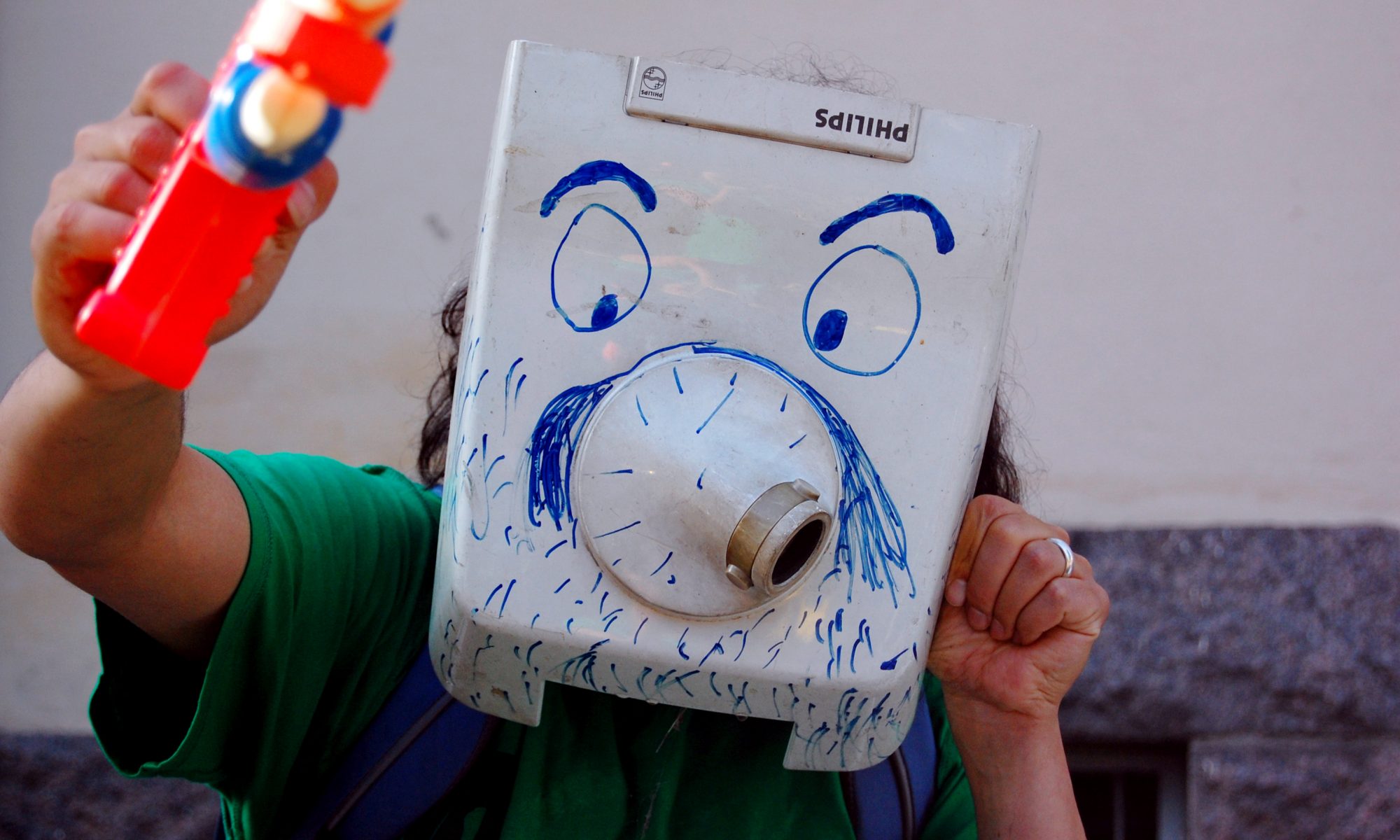
20210802

Visited Ambient Arkipelag 2021 in Tenhola over the weekend and heard Lau Nau & Minea perform in an old church.

Made a well planned build of the Trigger-to-Switch Project by Thomas Henry. This time the circuit is used to power a 12v water pump when the unit receives clock pulses. Works well (and way cleaner then my previous attempt)! Now I have an artificial artesian spring which follows my bpm in my disposal.

Spend a night at the Kurängen spring. Slept in a hammock. Or didn’t sleep rather, woke up at 5 to cycle home due to thunderstorm. Performed restoration work on site by removing a worn canvas from the spring base. The canvas had been set (in the 90ties I suspect) to keep the water clear but over the years naturally eroding top soil, decaying plants and other debris had rendered it useless. It was essentially blocking moss & other plants from establishing roots and preventing sunlight from accessing the bottom of the spring. The mud below the canvas smelled rotten (and was possibly a reason for the faint rotten smell of the water). I’m hoping that by planting peat and moss, which I’ll harvest from a swampy patch higher up the forest, I can establish a natural filter for the to the spring base. The filter is needed to keep the clay and mud settled. There is a lot of grey clay in the spring and I took some with me for experiments. I removed mud and all the debris I could catch during the night.

The spring was revealed over a meter deep. I suspect it has been the “eye of the swamp” which the long ditches in the little forest valley have been dug to dry out. Also found the car mentioned in Metsäauto ja lähde: miete maastoisesta suunnassa-olemisesta [Forestcar and spring: though on being on track in the ] (2015) Marko Leppänen. Dreaming of cutting a piece of the car panel for a spring water related electronics build. It feels prestigious somehow and disturbing it might be a bad idea.
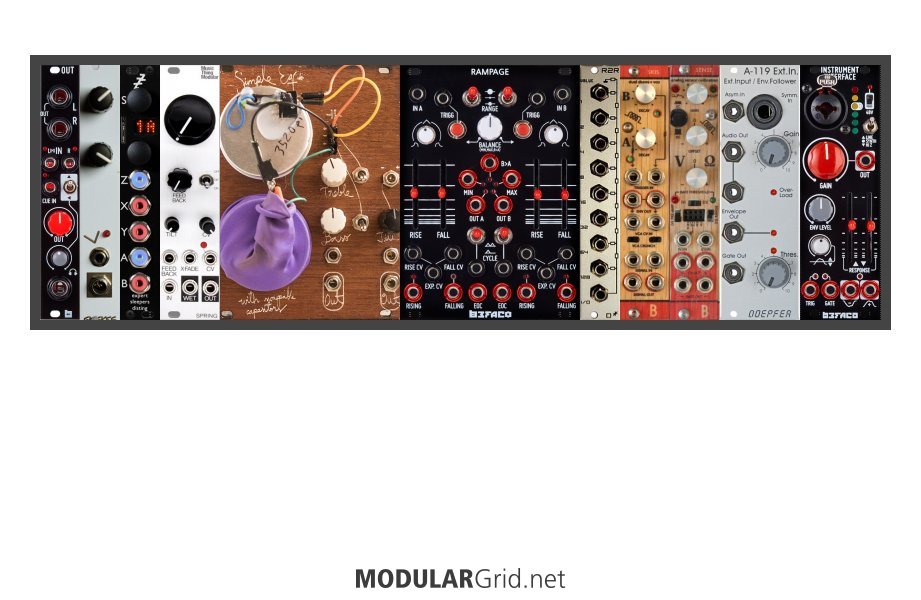
20210719

Talked and played waters at Kiilan äänipäivät. I had a wonderful time, stayed up way too late and made new friends. I enjoyed all the performances. Particularly liked Ahti & Ahti (perfectly lowercase guitar tremors) and .oO ensembles interpenetration of the four scores they had commissioned. Out of these a poem by Pauliina Haasjoki was my favourite and I also liked Leena Kelas piece titled “Ode to Soil and Elegy for Extinction”. In their interpretation the ensemble focused on distance, perhaps to draw emphasis to our experiences of the phenomenon of extinction. The performers were really far (across the wheat field) from the audience. Three small black dots in a vast plane. They begun executing the score but what they actually performed was impossible to see or hear. Suddenly they produced a lot of noise banging metal barrels and right after a sound clip of generic audience applause was played. The clip was treated with a phaser effect and slowly morphed into a squarewave bleep. This amplified our the distance to the performers. The field felt like a stadium concert. From a far the loud noises they had performed were effected by the wind and atmospheric gasses, which made the noise they produced wavery. Phaser effect morphing to squarewave was a nice discovery. The score for the piece (revealed later at an after party at Kiilojentalo where we hear two compositions by Pauline Oliveros, interpreted by the Truckfuckers) was very detailed and revealed that the drumming segment was produced from the prompt “AIM FOR JOYFUL CACOPHONY”.

I performed with the Kiila village spring (60.2372, 22.8633) which is a plentiful water source that produces drinking water for the village. It is situated between two fields (wheat and rye) and produces a small creek heading towards the sea. The spring opening is protected with five big concrete rims (covered by a plastic lid) and the enormous overflow (from under the rims) was covered by willows. Roope said the spring has a chalky taste… I think there was clay in it too. I think there were over 50 audience members and I had to use the full range of my voice to be heard. Felt messianic to shout next to a flowing creek. Water Lab (version 2) operated very well using batteries. I chained two lantern 6v’s (for 12v) to power the VC122 Gieskes which produced a small water jet by interpreting the amplitude of the voices the system produced (I’m pushing my usb power supply to ~410mA! and the only error is occational drops in the output when there is no signal). I polished my diy allflesh pads before the gig, felt like a proper way to prepare (also made a special t&r unit). I passed the map which the director of the Kurkijoki village museum drew us to the audience but I didn’t receive it back. The revolutionary dance poses and stretches were well received and the entire audience partook in my efforts. Being inspired by the The French Revolution, Pt. 1 & 2 podcasts by SRSLY WRONG I added French revolutionary poses to the mix. They worked great as bodies are off balanced and facial expressions amplified. See the statue for the French Revolution in Maubeuge as an example. The legs are arched back and if the riffle would be changed to a guitar the pose could be from a stadium gig. The revolutionary stretches feels like a worthy physical activity to explore further (also reminds me of Shadow Boxing Revolution, 2010).

Handed out a few copies of our (by Tea Andreoletti, Thomas Berra & me) Tasting book which is now released as a part of Museum of Contemporary Art Toronto’s Shift Key: Protection Spells program curated by Native Art Department International (Jason Lujan and Maria Hupfield). Bundled the booklet with a plastic knife which the audience could use to tear the sheets open and to perform one of the recipes in the book (also had some Sriracha sauce available). Tasting is the process of comparing two or more ingredients to each other (2021) is available for view for two weeks (and after this on youtube).

20210707

Hydrologian perusteet |Elementary Hydrology] (2014) Leppäranta, Huttula, Virta. A solid introduction to the topic. Too much maths but great for checking statistics.

Visited the most magnificent artisanal well in Finland… Possibly of North Europe! The well was made accidentally in 1987 as a part of a ground water survey. Engineer drilled a 20 m deep hole (ø ~5cm) to a river bank next to a farm. The drill bit broke into a reservoir which produced a three meter high water jet. The water sprays from a bit shaft which is locked firmly to the ground, possibly reaching bedrock. The farmer who owns the land has tried moving the shaft and confirms it does not budge. The jet has been spraying for over thirty years and is currently 2 m high. He estimated that the fluctuation of the stream height is seasonal. I would estimate that it produces three litres of fresh, very cold and neutral tasting water per second. The taste felt grounded (alkaline?). The current farmer has lived on the property for 13 years and detailed that nowadays only a few visitors visit the well. In the nineties “truckloads of tourists” visited the site and the previous owner was not exited about the attraction.  A few years back the farmer attempted to make the well accessible by building a visitor trail (it would follow the river stream) but they couldn’t figure out who owned the land across the river and plans were put on hold. Currently the well produces drinking water for forest boars which the farmer keeps. He’s hoping to place a tub for bathing on the site. Currently the jet lands an a concrete well ring which is sinking slowly into the muddy riverbank.

The landscape, the views and the nature surrounding the industrial-natural-spring-well felt compelling. I felt an urge to act and to develop something for the site. I’m fortunate to have grown up surrounded with landscape paintings. The paintings are old (by Finnish standards) and they continue to afford me a view to the past. As paintings, the views live and look different depending on light the season offers. I particularly remember a picture of a red house. When visiting Kokkola in the early 90ties I saw the same building, now abandoned and climbed in trough its window. It felt like I knew the people who had stood at the site (and the horse whose name I remember). Because the landscape paintings are old I can imagine views they depict having a past and a future. I think this compels me to act when I counter a natural phenomenons of interest, like the artisanal well. I’m compelled to interact because I can imagine someone seeing it in the future. I don’t think this is an effort to capitalize views, to use them as resources. It is a process of keeping them, keeping the view and even to make it more long lasting. I started dreaming of a granite observatory which would house the water jet. A bright copper bowl would be set so that it would ring as the water lands on it. A pipe in the bottom of the bowl would guide the water to the nearby stream and counteract erosion. People would be invited to listen to the water and to tap of the jet stream for a taste.

20210403

Homemade traditional resin flux (2019) Matthew Skala. DIY electronics as a forest wandering experience. As Skala mentions, raw pine sap is currently rarely extracted and he imagines it’s mostly used for homemade incenses. Which makes it all the more interesting for the kinds of electronics I’m into! He recommends using anhydrous magnesium sulfate for removing residue water from the resin (which brings this experiment close to mineral waters). Sorbic acid is also added as a preservative (to keep mold out) and citric acid to activate the flux.

It occurs to me that some readers may not know what a pine tree looks like. I’m not sure I can give a definitive spotter’s guide here (try searching the Web or looking at the picture above), but in general the easiest sign to look for is the leaves.

I was working as a clerk at the Konala Shell gas-station when Finland converted markka’s to euro’s, which caused a spike in the price of gas. “I don’t mind the change”. A customer spoke softly. “I fill the tank with what I have”. They continued and I feel them now. “How is the pandemic effecting your praxis?” I imagine someone asking. “I don’t mind the change, I do the most with what I have” I speak out loud, in the damp cellar I call a studio.

20210208

Modulisme Session 034 a playlist by Modular Music Station. Which is a “internet radio & web portal dedicated to electronic music made with modular synthesis, test equipment & experimental instruments”. The 034 session focuses on Serge instruments and introduces a comprehensive palette of sounds the system can produce. My favorites on the playlist include Bevis att Napoleon aldrig existerat by Överklassen, Serge Time by Miguel Frasconi and To Bring Out The Shame by Francisco Meirino. Thomas Ankersmit is featured too.

I think Lowercase/Onkyokei/extreme minimal ambient composition as it is being defined on the llllllll thread is the best form of cultural input for these times. It’s like listening to nothing, which is something I need at a time when everything is a performance: When all relationships are confined to the attention we perform trough screens. Times are rough for peppy radio hosts and music producers. It is being revealed that observing high energy performances demand energy (which I don’t have, busy surviving) and that space is a luxury (sounds which give space are a gift). Being-Sound – From Wandelweiser to Onkyô (2018) Jason Brogan is a good source for learning about the aesthetic.

[…] given the notion of affect as posited by Deleuze and Guattari, sound-itself may be understood as being always already real. Thus, sonic actualization — contrary to its common meaning — entails the contextual, qualitative exteriorization of sonic interiority. Performance, then, may be understood as the site-specific fulfillment of the process of actualization.

A complicated sentence. I read is as a way to approach all sounds as already existing and the performance of a composition as tapping into a sound or tone. This is a nice and comforting approach, a process of becoming with sound. It feels similar to tasting (a spring water): The taste is there already and is actuated by the performance!

I don’t like wearing headphones unless I have to (last years weekly online teaching gigs were headphone-heavy) and I often listen to music from the crappy speaker of my mobilephone. I think this suits lowercase/onkyokei/extreme-minimal stuff well. The distortions and space ambients make the music even thinner. The sounds are seeping from the minuscule holes of the device and counterbalanced by remote machine sounds, plumbing, the radiator and the fan of my computer. I get energy from looking for the sounds in the noise. My curiosity is sparked: Am I really hearing this? Did an artist conceive this?

Once, while on a run I didn’t notice a track had ended and I took the wind howling on the edge of my headphone as music. A perfect example of a sound becoming. Or was it a hyperchaotical listening experience (a defined by Quentin Meillassoux)? “hyperchaos […] suggests that […] randomness remains as only one particular mode of presentation among others”. All work (which is not work to maintain the flesh or gray infrastructure) is performed in screens and earcups. Majority of the performances seek to resolve events. I think art which sparks curiosity is needed for energy.

Seven Points for a Computer Critical Computer Art by Sarah Groff Hennigh-Palermo. A simple list to keep in mind. She also operates in the LiveCode.NYC which is developing artistic live coding tools.