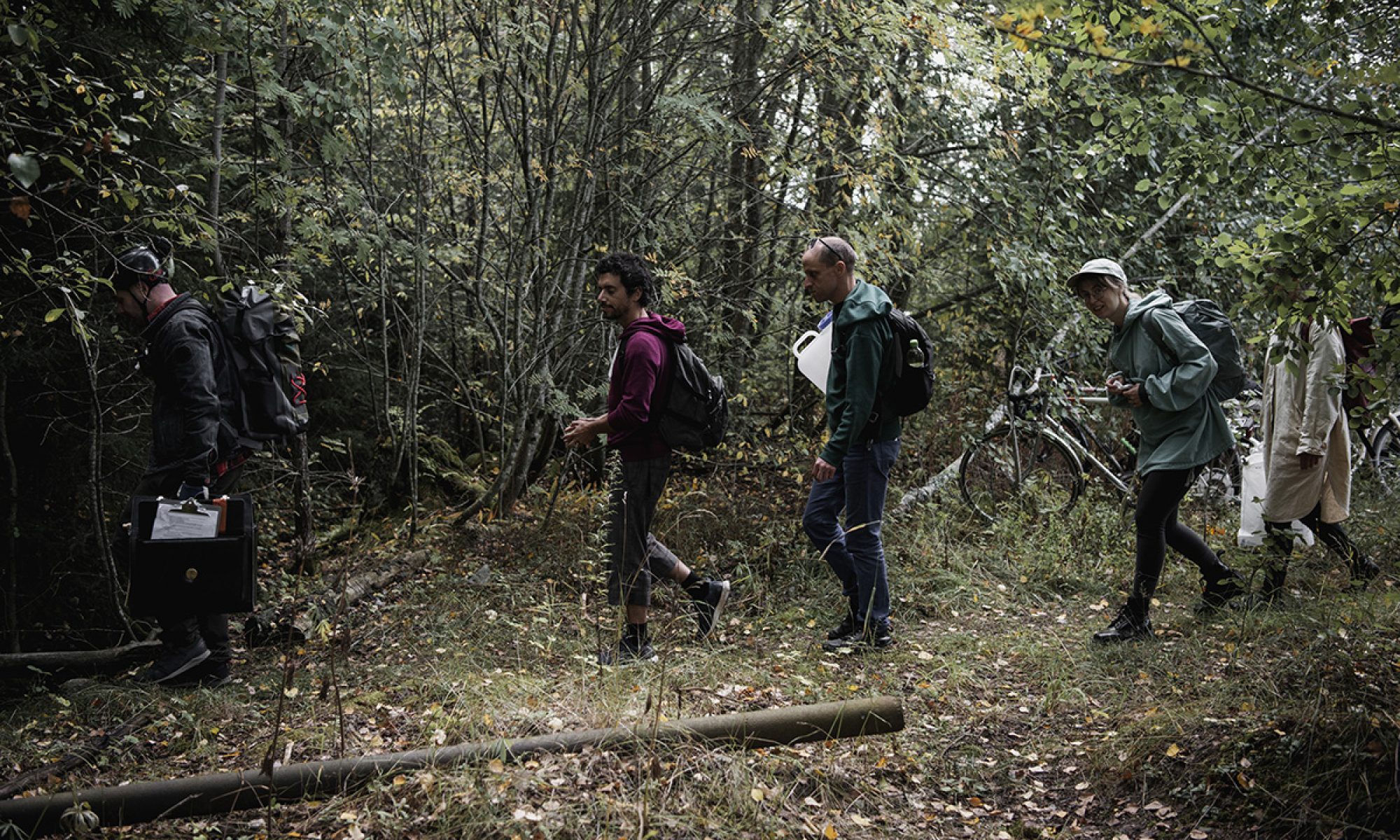

When teaching, I’ve used a lot of effort writing about the what we do during classes. This habit started 2008 and in the best cases, writing has happened collectively together with the students. But most of the time, I’ve produced documentation after classes, and worked extra to narrate student actions and formalize the analysis we’ve made. The writings also aim to archive relevant links to articles or artworks that have been referred. This practice has been borderline manic on my behalf. In Kankaanpää Art School I spend as much time writing about what we did during a day, as I spend with the students.
Now, through my involvement in decolonial actions and movements, I have gained a better understanding of why I have felt such a strong need to narrate and document the collective actions I’m involved in. I think this impulse is rooted in an asymmetry of power: if I don’t verbalize what is happening, someone else will do it for me. Someone else’s definitions, might work against my interests.
To prevent appropriation, I have sought to establish my own definitions of the art I make and the education I facilitate. I now understand this has been damaging to the art, because there is no room for the audience to define it outside my blabber. Perhaps this is why I’ve sought to do spectacular work, which is impossible to grasp during the action. Recently, I halted this practice (detailed in a text reflecting on performance pedagogics). The collective work we’ve done with Nomadic Kiln Group or the Flying Garden, have been so grandiose in scale, that my worst trades have been balanced.
Yet, I later transferred the same habit to the Palestine solidarity work I’m active in. Involvement in this space has produced a epic body of detailed event documentations, some of which have helped to guide collective actions involving volunteers from mixed groups. For three years, we have maintained an “advisory board” -style body for de-escalation of public events, and this body maintained responsibility for updating shared guidelines and discussing policies. We’ve made our own definitions of what de-escalation is for free Palestine spaces. The extensive documentations seek to expresses a collective rational, expressing reasoning behind decisions but they also carry harmful agency.
There is no formal mechanism to enforce the suggestions the body offers. Everything has been based on trust. The articulated policies aim to balance vocal support for resistance with the (borderline parental) pacification of provoked individuals, while also informing people about hard-to-grasp details of apartheid and related issues. Initially they were copied from EX and other groups documents, but revoked intensively to fit resistance efforts in a decolonial framework.
We have now archived the document. It was written collectively during three years of intensive organizing. I was motivated to archive it, as I observed that some felt the guidelines limiting the potential of our demonstrations, events and the movement. The guidelines ascribe authority and I hope that making a distinction between archived guidelines, and the situation we are now in, will let us perceive future events without prior assumptions. This will allow us to ask: what do we want from public assemblies?
The archived document is not bad and it offers relevant political context and improves the accountability of volunteering folk. It was made to give new volunteers confidence and a reference point. Yet, it acts as a kind of gray eminence, suggesting that there is a strategic understanding of public assemblies within a resistance framework. There is… But in practice this strategic understanding is between the volunteers and organizers.
It is not in the text.
As people are now more familiar with West Asian politics, decolonial thought and experiences of resisting supremacist ideologies, I look forward to seeing what new policies, tactics and thinking emerge. We can redefine how to collaborate in an increasingly hard political terrain. Personally, I think people often mistake their candid critique of other groups’ strategy as having a strategy of their own. The old de-escalation group policies have worked as a steppingstone in this regard and this realignment (archiving them) will help people adjust, to perceive their own weight.
I think building an attitude, is more important then having the correct words.